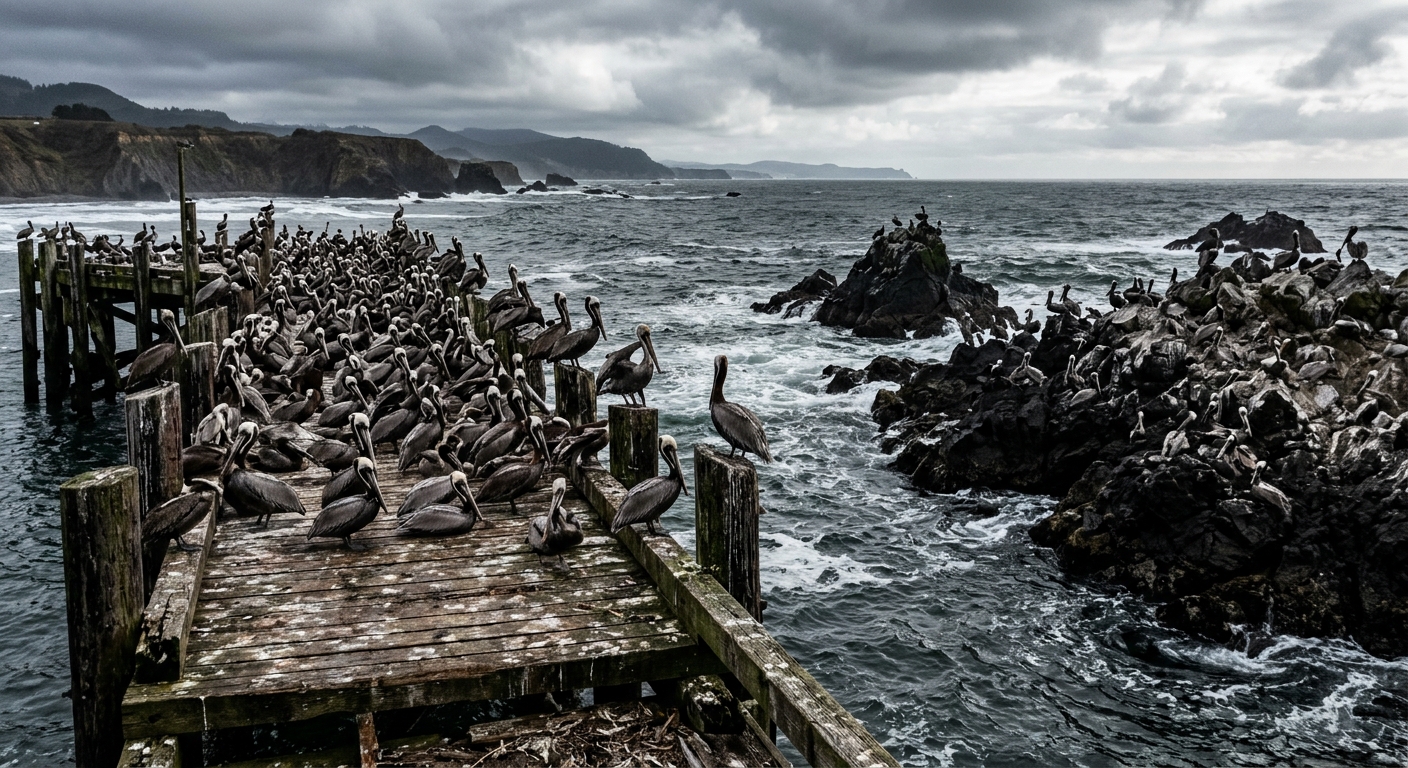
AI-generated illustration; not a photograph of the reported event.
- calendar_today November 16, 2026
Massive Flock of Brown Pelicans Arrives in Bandon
Bandon, a small community along the southern Oregon coast, recently witnessed an extraordinary avian event as thousands of California brown pelicans (Pelecanus occidentalis californicus) swarmed the town’s waterfront. The phenomenon drew crowds, sparked a flurry of social media activity, and left long-time locals astounded by the sheer number of birds covering docks and rocky seastacks.
Pelicans Blanket Docks and Seastacks
Photographs shared across social networks and captured by local photographer Manuela Durson reveal Bandon’s waterfront structures nearly invisible beneath the gathered flocks. The pelicans covered every available surface, including crabbing docks and prominent oceanfront rock formations. The influx forced the city to place cones at dock and boat entrances to prevent disturbances to the birds. While some sightings were reported at nearby Coos Bay, the overwhelming majority of the flock concentrated in Bandon.
Sudden Appearance and Swift Departure
The pelicans seemed to arrive suddenly, likely beginning around November 12, 2026, coinciding with a week of extremely heavy wind and rough ocean conditions. By dawn on Sunday, November 15, most of the birds appeared to have already moved on, with just a few remaining. Jim Proehl of the Bandon History Museum noted witnessing only three pelicans on the docks that morning, remarking on their “civil” and quiet behavior compared to more boisterous sea lions.
Uncertain Causes and Migration Patterns
While the exact reason for such a dramatic and concentrated pelican flock remains unclear, wildlife experts suggest the region’s powerful winds—recorded at up to 75 mph—may have played a role in driving the birds to this specific spot along the coast. The Oregon Department of Fish and Wildlife (ODFW) recently highlighted the annual migration of brown pelicans, typically observed passing through Lincoln and Lane counties. However, this year’s unusual aggregation brought them further south and in greater numbers than usual.
Guidance on Feeding and Past Challenges
The large congregation of pelicans in Bandon also revived reminders from wildlife officials not to feed coastal birds. Following a troubling die-off in January 2010, when many emaciated pelicans were found along Oregon beaches, experts have warned that human food—like bread—can be harmful. Pelicans require fish for proper nutrition, and feeding them scraps can result in malnutrition and a dangerous acclimation to human presence.
Lasting Impressions from a Rare Event
For many residents and visitors, the sight of thousands of brown pelicans transforming Bandon’s waterfront was awe-inspiring and unprecedented. Although the massive flock’s stay was brief, the event offered a unique glimpse into the complexities of bird migration along the Oregon coast. The precise factors that compelled so many pelicans to settle briefly in Bandon may remain a mystery, but the spectacle reinforced the dynamic nature of coastal wildlife and the importance of careful stewardship.
Source: beachconnection.net.