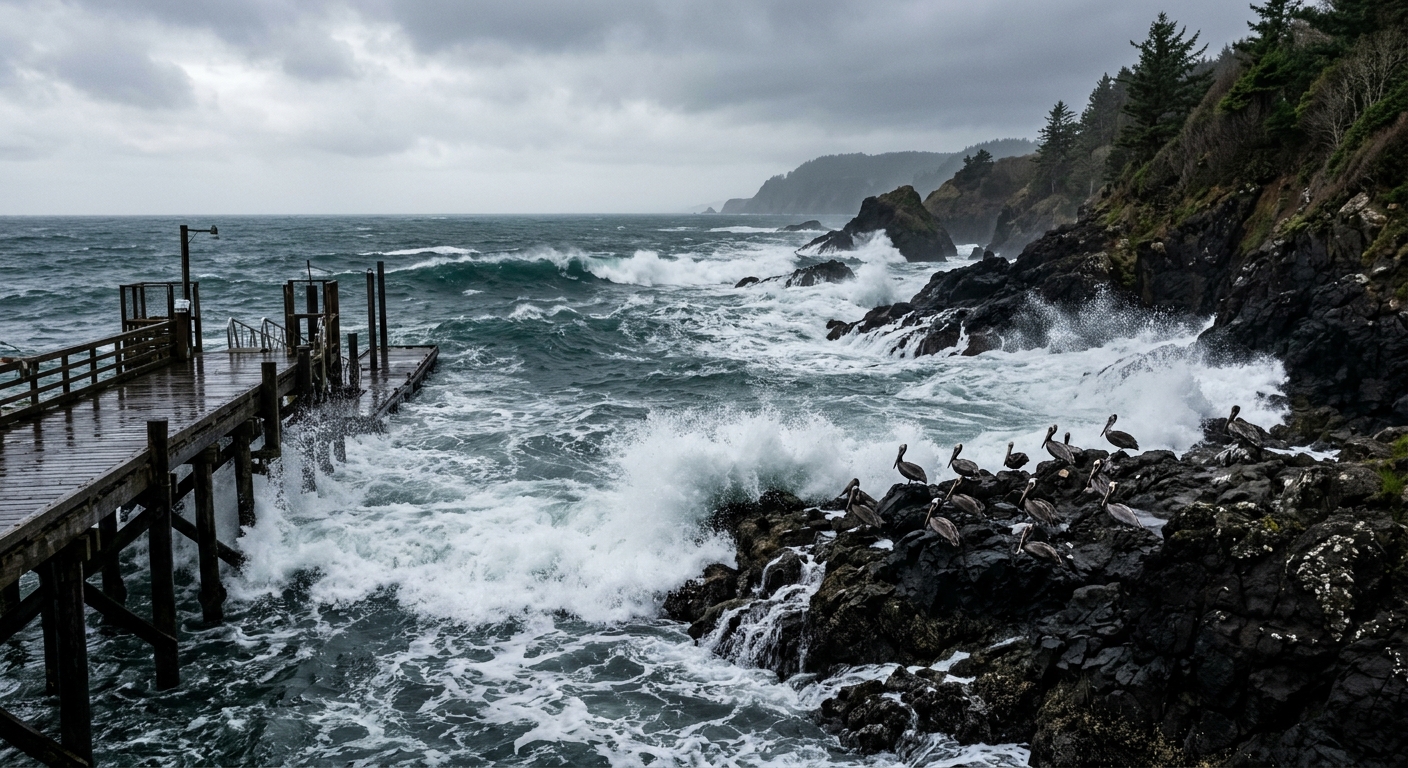
AI-generated illustration; not a photograph of the reported event.
- calendar_today November 16, 2026
Magnitude 3.4 Underwater Quake Occurs off South Oregon Coast
A small underwater quake took place off the south Oregon coast on Saturday afternoon, registering a magnitude 3.4 and striking about 65 miles offshore near the Oregon-California border. The event occurred at 3:22 p.m., according to the United States Geological Survey (USGS), and its epicenter was measured approximately 6.2 miles beneath the ocean surface.
Unusual Location for South Coast Seismic Activity
This recent oregon coast earthquake was notable for being positioned somewhat farther south than the quakes usually detected in this region. While dozens of smaller quakes frequently occur off the southern Oregon coast, they are typically centered near Bandon or Coos Bay. Despite their regularity, most of these underwater events happen at least 60 miles west of the shoreline, remaining far enough from land to avoid any damage or triggering of alerts.
Quake Felt in Gold Beach
Although such offshore seismic activity rarely impacts coastal communities, the USGS received a report of the quake being felt in Gold Beach. No injuries or damage were reported in association with the incident.
Recent Seismic Trends off Oregon Coast
This magnitude 3.4 quake follows closely after a smaller M 1.5 underwater quake occurred just west of Charleston two days earlier. That event was notable for being less than 50 miles offshore, nearer to land than typical activity. All these recent events are part of ongoing gorda ridge seismicity and activity along the blanco fracture zone, underwater geological features that commonly experience small tremors.
Relation to Cascadia Subduction Zone
The cascadia subduction zone—the major fault in the region and the focus of significant geological attention—lies approximately 200 miles east of where these offshore quakes occur. Experts note that the recent seismic activity along the Gorda Ridge and Blanco Fracture Zone is unrelated to movements along the Cascadia Subduction Zone. These smaller offshore quakes, even when larger than typical, do not relieve stress in the subduction zone or portend a larger event, sometimes referred to as "the big one."
Stormy Conditions and Busy 24 Hours Along the Coast
The 24-hour period along the Oregon coast was marked by additional notable events, including significant storm waves and the dislodgment of the bell buoy at Depoe Bay due to rough weather. Additionally, large numbers of pelicans were observed swarming docks and rocks along the southern coast.
Offshore Seismic Activity Common and Typically Safe
Small underwater quakes like this one are common off the south Oregon coast and are rarely felt on land, given their offshore distance and depth. Authorities continue to monitor the region for changes to quake safety oregon and provide regular updates for residents and visitors. No tsunami warnings or emergency measures were indicated in response to these recent seismic events.
Related coverage
Source: beachconnection.net.