- calendar_today May 20, 2026
New England — The concept of queer ecologies is at the heart of a groundbreaking exhibition by artist Eli Brown, now open at the Distillery Gallery. The show invites New England audiences to reconsider their perceptions of nature, gender, and survival in response to a changing world.
A Multidisciplinary Take on Nature and Gender
Brown’s exhibition, aptly titled Museum of Queer Ecologies, explores the entanglement of biology and queerness against the looming backdrop of climate change. By presenting speculative futures shaped by rising sea levels, Brown confronts longstanding binary frameworks of sex and gender. The result is a vibrant study that situates trans-ness as a natural, evolutionary phenomenon—transcending species and human constructs.
Beyond Binary: Queerness in Evolutionary Biology
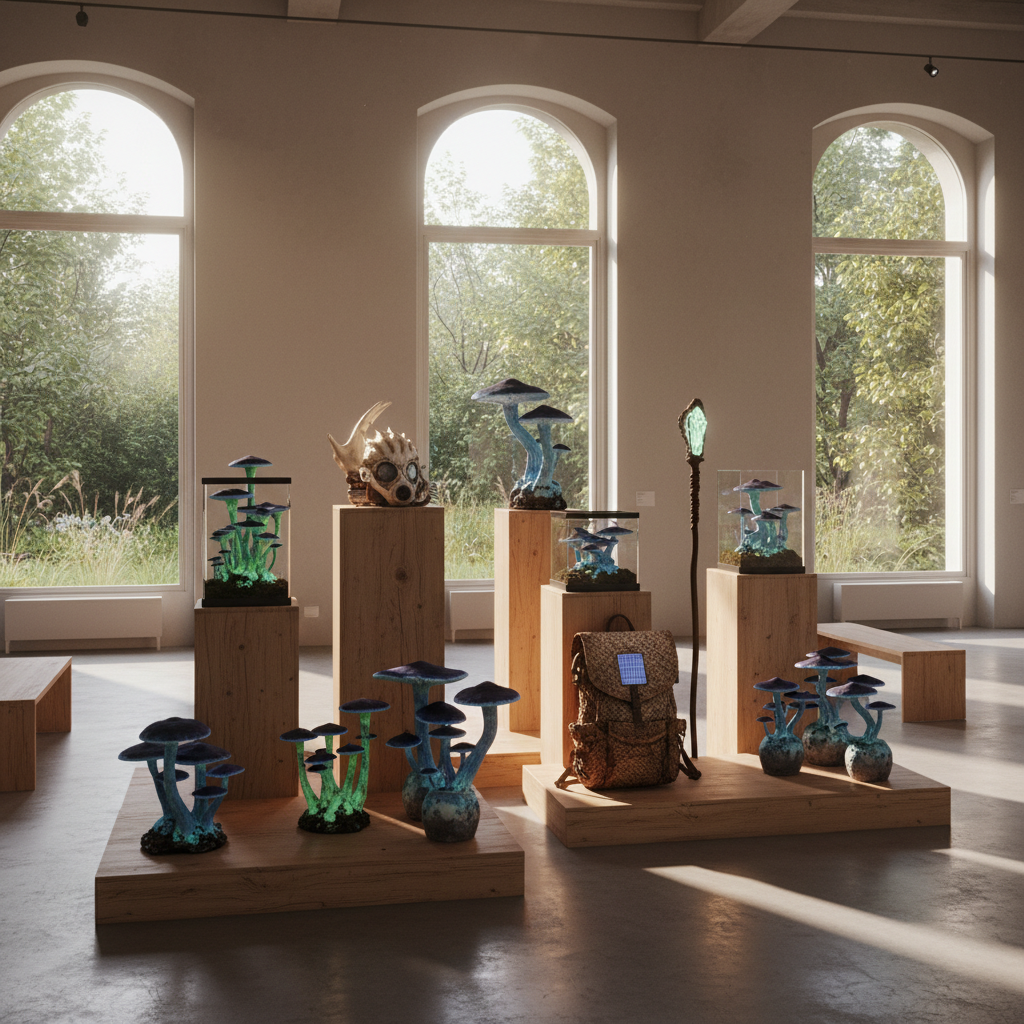
The artist’s interrogation of gender diversity draws inspiration from examples in nature, particularly the fungal world. Species of fungi, renowned for their thousands of mating types and a wide variety of reproductive strategies, offer a lens into the vast spectrum of queer ecology. In the gallery, visitors encounter installations that highlight these biological realities, encouraging a scientific and cultural dialogue about what it means to exist outside rigid categories.
Signature Installations: Symbolism and Speculation
Among the exhibition’s centerpiece works is the Future Species Survival Kit. This post-apocalyptic art piece incorporates both mycological forms and queer emblems, prompting viewers to question where survival—and adaptation—truly reside. The Survival Kit asks: how might human bodies, alongside the non-human, adapt beyond current definitions?
Another standout, Greenhouse, brings together the voices of trans and non-binary individuals. Through immersive audio installations, the piece cultivates empathy and understanding by giving prominence to stories related to trans identity, body autonomy, and the experience of living atop the spectrum of gender fluidity.
Fungi and Gender: Parallels in Adaptation
Brown’s exploration of fungal genders bridges science and art, using the extraordinary diversity found in fungi as a metaphor for human and non-human identities. These relationships reflect an important lesson from evolutionary biology: survival is often linked to diversity and adaptability. By centralizing queer ecologies, the exhibition suggests that life’s resilience depends on variations unconfined by binary logic.
Connecting with New England Communities
Given New England’s strong academic and cultural traditions, the show resonates with local institutions and audiences eager to engage with progressive ideas. Museums, universities, and advocacy organizations in the region have become partners in fostering conversations about gender diversity, trans liberation, and ecological stewardship. The exhibition offers a platform for community dialogue that bridges generations and disciplines, emphasizing the urgent relevance of queer ecology in the era of climate uncertainty.
Imagining Fluid Futures: Hope from Surrealism
Through surreal settings and narrative storytelling, the Museum of Queer Ecologies crafts an optimistic vision for the future. Brown’s works repeatedly return to the theme of gender fluidity, celebrating the creative potential of hybrid identities and adaptive bodies. The pieces gesture toward worlds in which both humans and non-humans embrace multiplicity, rejecting the notion that categories must be fixed or oppositional.
Charting New Possibilities for Queerness and Ecology
By challenging assumptions and inviting participation, Eli Brown’s exhibition positions New England as an important site in the dialogue around queer ecologies. Through art, science, and community engagement, the show highlights how post apocalyptic art and queer identities can inform paths toward sustainability and mutual flourishing. Brown’s contemplative approach suggests that liberation—for all species—may depend on our willingness to reimagine boundaries and embrace a world of intertwined destinies.