
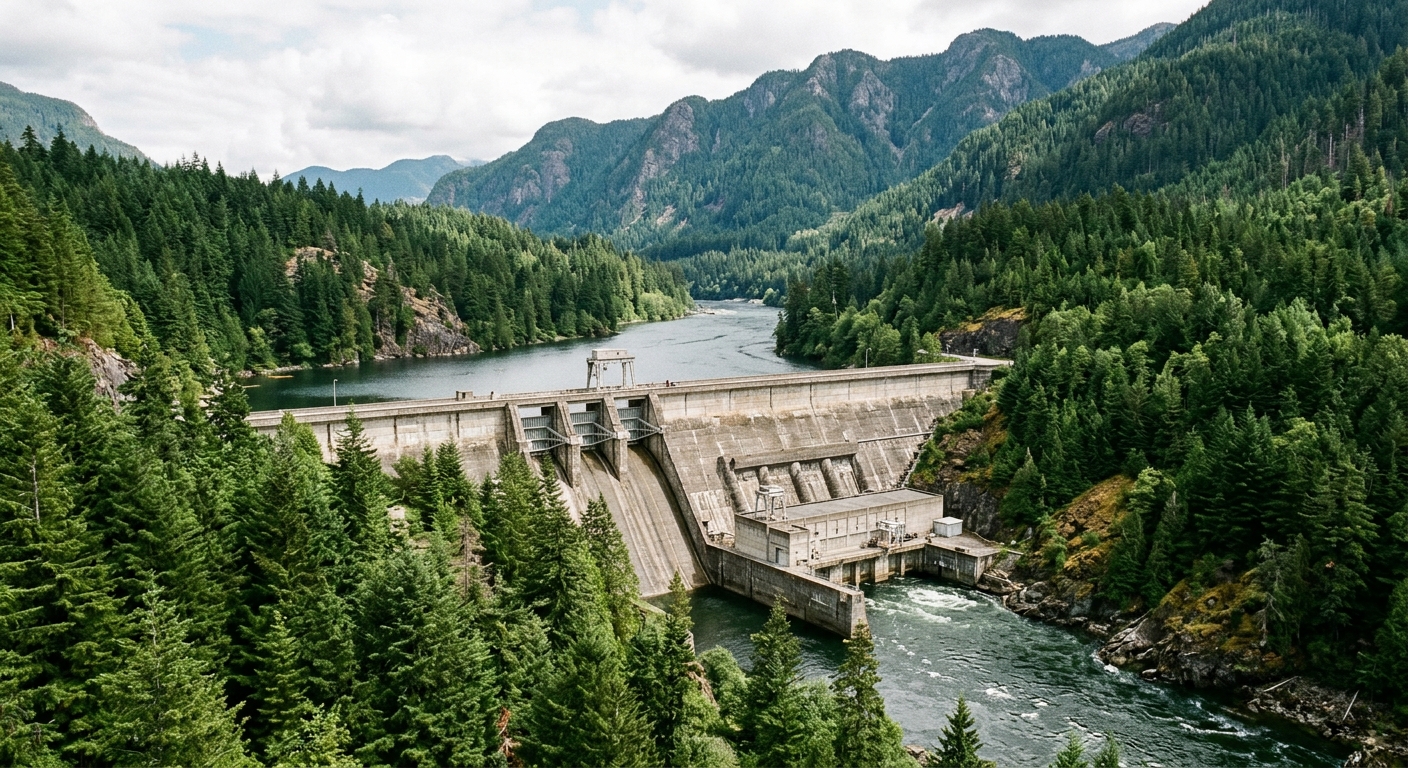
AI-generated illustration; not a photograph of the reported event.
- calendar_today November 26, 2026
Request for Records About Trail Bridge Dam
On April 1, a staff attorney representing Cascadia Wildlands submitted two public records requests to the Eugene Water and Electric Board (EWEB). The requests sought documents related to the Trail Bridge Dam, a part of EWEB’s Carmen-Smith Hydroelectric Project, specifically focusing on fish passage systems and associated costs.
Dispute Over Fish Passage and Associated Costs
Cascadia Wildlands has spent nearly two decades advocating for improved fish passage at Trail Bridge Dam, arguing that the existing barrier blocks native fish like Chinook salmon and bull trout on the McKenzie River. Currently, EWEB handles fish passage with a temporary trap-and-haul system, moving Chinook salmon by truck and relocating bull trout using fishing lines. Bethany Cotton, conservation director at Cascadia Wildlands, contends these methods are both stressful and ineffective for the fish, especially as fish migration often coincides with wildfire season, complicating operations.
Cost Estimates and Requests to EWEB
In April 2025, EWEB approved an additional $3.3 million for designing a new permanent trap-and-haul system to comply with its Federal Energy Regulatory Commission (FERC) license and the Endangered Species Act. Cascadia Wildlands, through attorney Peter Jensen’s records requests, sought documents on the cost estimates for a potential fish ladder, as well as financial details about fish passage measures at Trail Bridge Dam since May 2019. Cascadia’s aim was to compare the possible costs of a fish ladder—a volitional passage system—with the expenses incurred from trap-and-haul operations, which have been ongoing since EWEB agreed in 2008 to build a fish ladder as part of its settlement for dam re-licensing.
Rising Price Tag for Public Records
The records request process proved challenging. EWEB initially did not respond to Jensen’s requests within the legal timeline, stating it had no record of them until Jensen resent the documents. After filtering the requests to reduce volume, EWEB estimated the cost at $4,674 and denied a fee waiver. EWEB spokesperson Aaron Orlowski noted that fee waivers are considered when releasing records is shown to primarily benefit the public; in this case, EWEB said the demonstration was insufficient.
On September 14, Cascadia Wildlands agreed to the estimated price, but EWEB clarified that the figure was only preliminary. In October, after Jensen requested an update, EWEB raised the estimate to $31,274.30 due to the need for additional legal counsel review. Orlowski later noted that the price had been revised to $30,411.25, but Cascadia Wildlands was not immediately informed of the $863 reduction. Orlowski attributed the increase to extra review requirements by external law firm Troutman Pepper Locke, citing the sensitive nature of topics like security, emergency preparedness, and critical infrastructure included in the records.
Ongoing Frustration and Next Steps
Jensen expressed frustration at the substantial cost, describing it as prohibitive for Cascadia Wildlands. He also questioned why EWEB needed outside legal counsel, believing the organization had dedicated internal staff. Orlowski responded that EWEB relies solely on outside legal counsel for such reviews, using different firms depending on the legal specialty required.
In a November 17 response, EWEB clarified that the initial price estimate overlooked the costs of additional legal review, labeling this as a human error. EWEB’s own policy states it should minimize costs to customer-owners while complying with public records laws.
Cascadia Wildlands is currently assessing its options for appealing the approximately $30,000 charge, as the dispute over transparency and costs for public records continues.
Source: eugeneweekly.com.


