
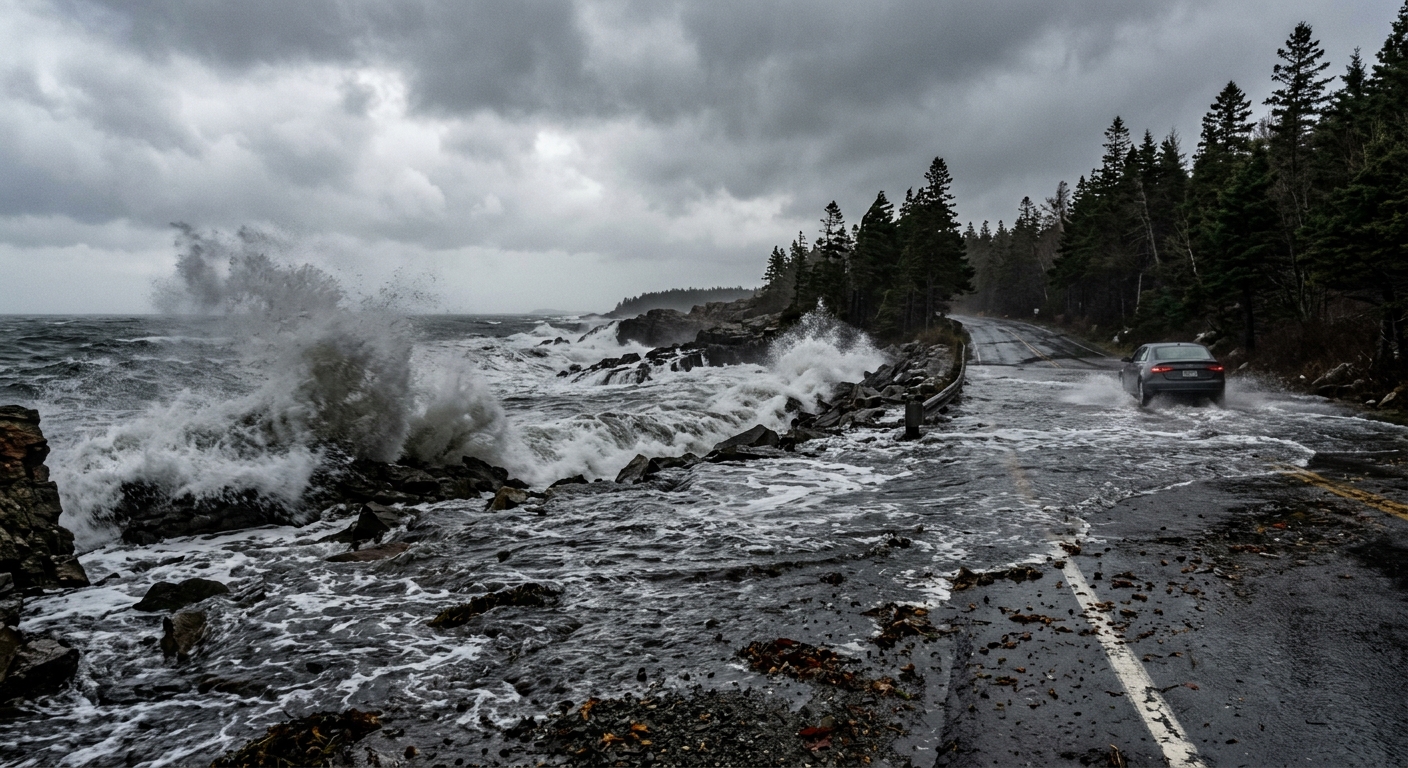
AI-generated illustration; not a photograph of the reported event.
- calendar_today November 23, 2026
Major Coastal Flood Warnings Impact Oregon and Washington Coastlines
The Oregon and southwest Washington coasts are facing significant threats from coastal flooding this week, as the National Weather Service (NWS) raises both Coastal Flood Advisories and Coastal Flood Warnings. Driven by powerful king tides combined with active coastal storms, water levels are forecasted to rise dramatically, prompting officials to recommend staying off the beaches for public safety.
King Tides and Coastal Storms Heighten Flooding Threat
According to the NWS, king tides—higher than normal astronomical tides—are set to intensify during the week of Thanksgiving. "King tides will lead to higher than normal high tide cycles during the week of Thanksgiving," the agency reported. With incoming storms expected to elevate surf conditions, the combined effects are likely to create some of the most impactful beach flooding in years, particularly between Monday and Thursday.
South-Central Oregon Coast: Highest Flood Risk
For the south-central Oregon coast, including areas such as North Bend, Charleston, Coos Bay, Reedsport, Port Orford, and Gold Beach, a Coastal Flood Advisory is in effect from 7 a.m. to 4 p.m. Monday. This is followed by a more severe Coastal Flood Warning from 7 a.m. Tuesday through 7 p.m. Thursday. Low-lying coastal zones in Douglas, Coos, and Curry counties can expect up to 2.4 feet of inundation on Monday, worsening to as much as 3.1 feet by Tuesday and Wednesday as king tides align with storm surge and high waves. On Thursday, flooding is forecast to reach up to 2.6 feet.
Portions of Highway 101 near Gold Beach, Coos Bay, and Reedsport are among those potentially affected. Water levels near the beaches will also fluctuate with wave height; significant breaking waves of 23 to 28 feet are expected, likely exacerbating shoreline flooding during late morning and early afternoon high tides.
North Oregon Coast and South Washington Coast: Flood Advisories in Effect
On the north Oregon and south Washington coasts, a Coastal Flood Advisory remains active through 4 a.m. Tuesday, transitioning to a Coastal Flood Warning from 4 a.m. Tuesday until 4 a.m. Friday. Flooding as much as 2 feet above ground level is possible during high tide cycles. Low-lying areas along the immediate coastline, as well as regions near bays, sloughs, and lower coastal rivers, are at risk. The advisory and warning apply to a broad area, encompassing both the north and central Oregon coast and the south Washington coast.
Central Washington Coast: Significant Flooding Anticipated
For the central Washington coast, the NWS has posted a Coastal Flood Warning for Grays Harbor County from 8 a.m. to 2 p.m. Monday. Shoreline and low-lying areas could be inundated with 2.5 to 3 feet of floodwater. Authorities warn this could result in widespread road closures, water intrusion into homes and businesses, impacts to critical infrastructure, and shoreline erosion or damage.
Safety Precautions and Official Warnings
Authorities strongly urge residents in flood-prone areas to take protective measures and to remain vigilant for rapidly rising water levels over the coming days. The NWS emphasizes that "travelers should never drive around barricades or through floodwaters of unknown depth." Flood impacts along the Oregon coast may mirror the severe event recorded on January 3, 2026.
For up-to-date information on wave heights, local forecasts, and travel conditions, residents and visitors can refer to resources provided by the Oregon Coast Beach Connection and the National Weather Service.
Conclusion
The combination of king tides and coastal storms poses a considerable risk of coastal flooding throughout the Oregon and Washington coastlines. The most significant impacts are anticipated from Monday through Thursday, with up to 3 feet of inundation possible in some locations. Residents should follow official guidance, avoid beaches, and stay informed as conditions develop.
Related coverage
Source: beachconnection.net.


