- calendar_today October 8, 2026
Aurora Borealis Forecast for Washington and Northern Oregon
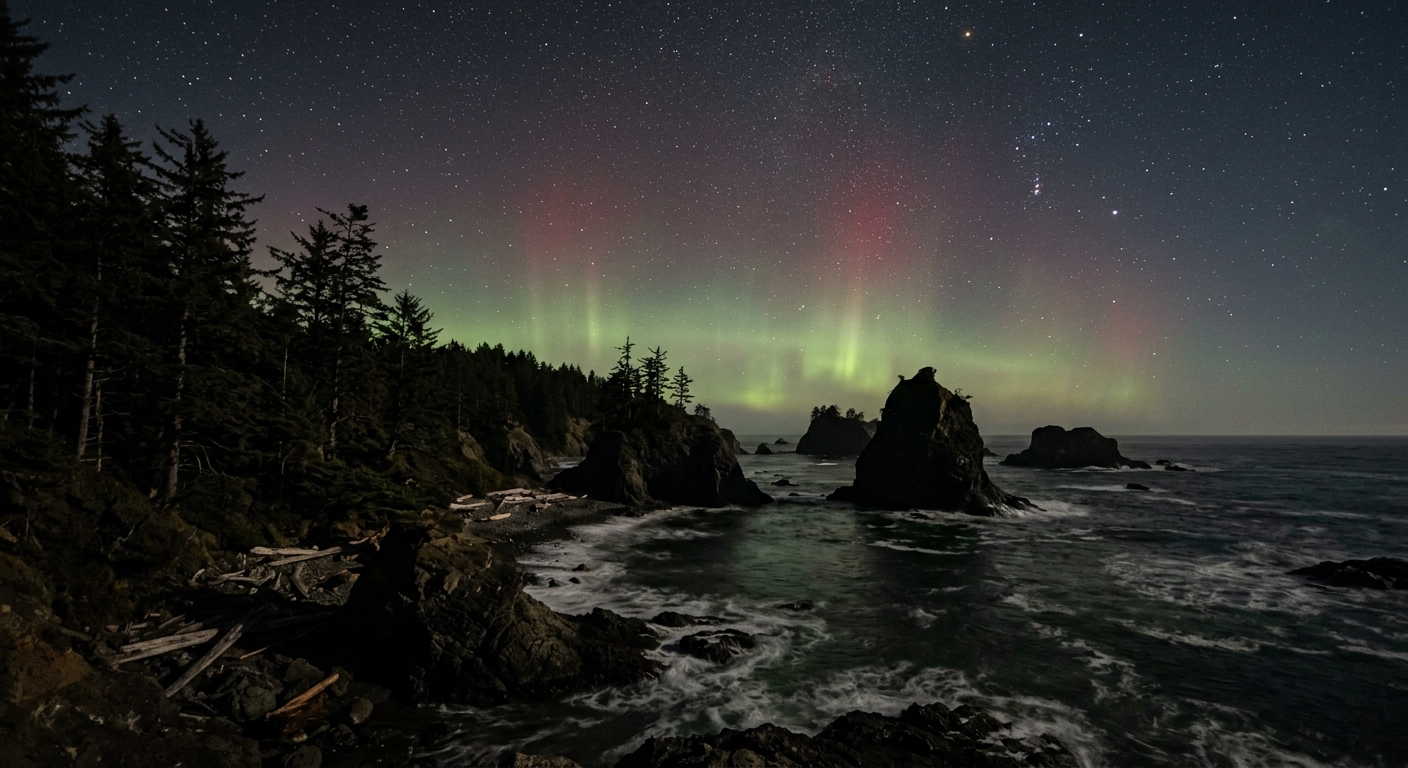
Stargazers in Washington State and northern Oregon have a chance to witness the aurora borealis tonight, Thursday, October 8, 2026. According to recent predictions, residents along the Washington coast and parts of northern to central Oregon, including coastal regions, could observe this rarely-seen spectacle if conditions remain favorable.
Clear Skies Expected Across the Pacific Northwest
Meteorologists report that the majority of the Pacific Northwest will enjoy mostly clear skies tonight, improving prospects for aurora viewing. However, while the phenomenon is likely to be visible to the naked eye in Washington, those in Oregon—especially farther south—will need a camera capable of night photography to capture the display.
Storm Origins and Prediction Details
The Space Weather Prediction Center (SWPC) in Colorado attributes this auroral event to a notable solar disturbance that occurred several days ago. The SWPC notes, “G1 to G2 (Minor-Moderate) geomagnetic storms are likely on 09 Oct with the arrival of a CME that left the Sun on 06 Oct.” This type of geomagnetic storm often triggers enhanced aurora activity, particularly near the edge of the auroral visibility line, which currently ends in southern Washington.
When and Where to Watch
- Best viewing times: 8–11 p.m. tonight, with increased chances between 2 and 5 a.m. Friday morning.
- Location highlights: All of the Washington coast (with the best viewing in upper Washington), as well as northern to central Oregon coastlines.
- Kp index: Forecasts indicate a Kp index of 5 (G1 storm) around 8–11 p.m., then peaking at 5.67 between 2–5 a.m.
For those within 300 miles of the auroral view line, there's a possibility of seeing the northern lights. While central Oregon has a slight chance, areas such as Coos Bay, Gold Beach, and Ashland in southern Oregon are unlikely to see the display.
Understanding the Aurora Colors and Displays
The aurora borealis—also known as the northern lights—results from gases in Earth's atmosphere interacting with solar flare material along the planet’s magnetic field lines. The most common aurora colors are oranges or greens, created by oxygen excited to different energy levels. According to NASA, green auroras occur at altitudes between 60 to 120 miles (100–200 km), while red auroras appear above 120 miles (200 km). Red auroras typically signal a very intense geomagnetic storm due to the scarcity of atmospheric gases at those altitudes.
Sometimes, observers may notice columns or curtain-like structures, which are auroral displays aligned with Earth’s magnetic lines in the sky.
Tips for Aurora Viewing
- Check the latest SWPC aurora predictions before heading out to track real-time conditions.
- Use a camera or smartphone capable of night photography, as the aurora may not be visible to the naked eye in Oregon.
- Find a location with a clear northern horizon and low light pollution for the best experience.
Summary and Further Resources
This geomagnetic storm presents a rare opportunity for aurora viewing in the Pacific Northwest, especially for residents along the Washington coast and northern Oregon. While the event’s intensity and visibility can change quickly, staying updated with weather forecasts and space weather alerts will maximize your chances of seeing the northern lights tonight.
For more details, weather updates, and travel information, visit regional weather websites and consult aurora dashboards provided by the Space Weather Prediction Center.
Source: beachconnection.net.