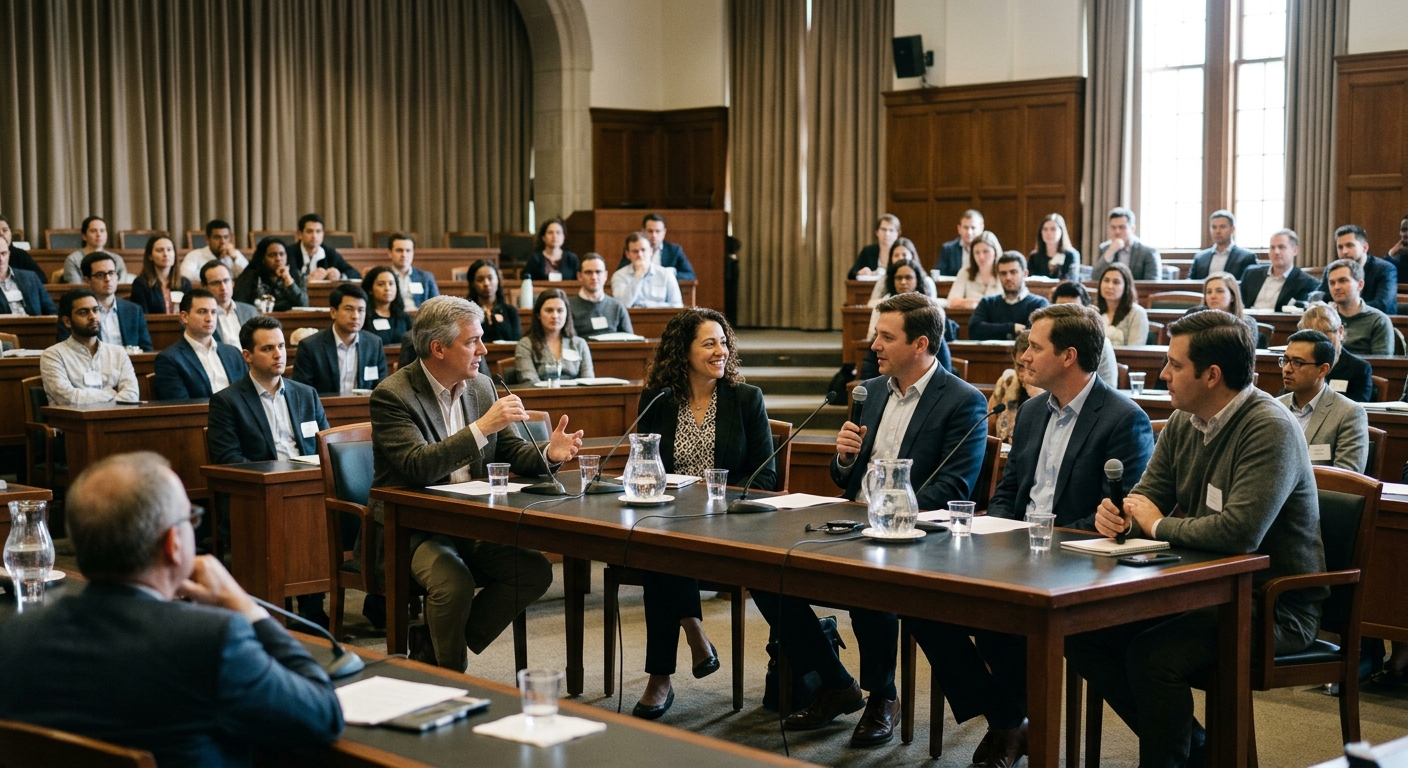
AI-generated illustration; not a photograph of the reported event.
- calendar_today May 22, 2026
Waukesha, Wisconsin — The evolving landscape of trade policies took center stage at Carroll University in Wisconsin, as regional experts, academics, and industry figures convened to discuss the ripple effects of recent U.S. actions on global commerce. The event, timed to align with Earth Day on April 22, served as the culminating session in the Talking Trade Live series, a three-part initiative to address pressing challenges and opportunities within the current trade environment.
Trade Policies in the Spotlight
Moderated by WisPolitics.com president Jeff Mayers, the discussion tackled the multifaceted business impact of President Donald Trump’s trade policies over the past year. Participants examined ongoing tariff uncertainty and debated how extended trade tensions could continue to affect regional and state economies well into 2026. The panel featured Carroll University professors Dr. Alexandra Sielaff and Dr. Lilly Goren, who provided instructive analysis on both the domestic and international consequences of U.S. policy changes.
Addressing Tariff Uncertainty in Wisconsin
Panelists delved deeply into the persistent tariff uncertainty confronting businesses across Wisconsin. Many in attendance noted how unpredictable policy shifts have forced companies to reconsider supply chains, recalibrate pricing models, and develop new contingency strategies. This unpredictability was characterized as a challenge with broad implications for everything from local manufacturing to international exports, underscoring concerns voiced regularly in Wisconsin politics.
Business Impact and Local Industry Response
For Wisconsin enterprises, the business impact of evolving trade policies remained a major theme throughout the event. Dr. Sielaff highlighted how local companies, especially those in the dairy and manufacturing sectors, have felt the pressure of increased costs stemming from tariffs. The presence of the dairy farmers sponsor underscored agriculture’s unique vulnerability amid these shifting dynamics. Carroll University’s commitment to fostering responsible business education was evident as professors and students alike discussed adaptation strategies and the need for advocacy at both state and federal levels.
Repercussions of Trump Trade Policies
The session critically examined the consequences of Trump trade policies on regional businesses and global positions. While some analysts see potential for renegotiated deals to benefit U.S. industry in the long run, most agreed that uncertainty has discouraged investment and complicated planning for Wisconsin’s mainstay industries. Panelists pointed to how trade tensions have stoked caution among entrepreneurs and investors concerned about long-term stability.
Trade Tensions and Global Alliances
One of the most closely observed themes was the effect of transnational trade tensions on global alliances. Dr. Goren addressed how retaliatory tariffs and disrupted relationships with partner countries have altered both market opportunities and diplomatic ties. Wisconsin’s exporters, particularly in the agricultural and manufacturing fields, find themselves navigating a volatile environment as old alliances are tested and new markets sought.
Strengthening Community Connections Through Trade Discussion
The trade discussion at Carroll University drew attendees from across campus and the broader business community, fostering a collaborative atmosphere for sharing experiences and insights. The series was sponsored not only by Carroll University but also by the Dairy Farmers of Wisconsin and Michael Best Strategies, reflecting the intersection of academia, agriculture, and policy.
Looking Ahead: Wisconsin’s Economic Outlook
As the panel concluded the final segment of the series, experts emphasized the importance of continued dialogue and adaptability in the face of unpredictable trade environments. The moderated session left attendees with a cautious yet optimistic economic outlook, highlighting the resilience and forward-thinking strategies embraced by Wisconsin businesses and institutions. Organizers noted the value of such civic engagement and hinted at future events aimed at supporting community stakeholders through uncertain times.