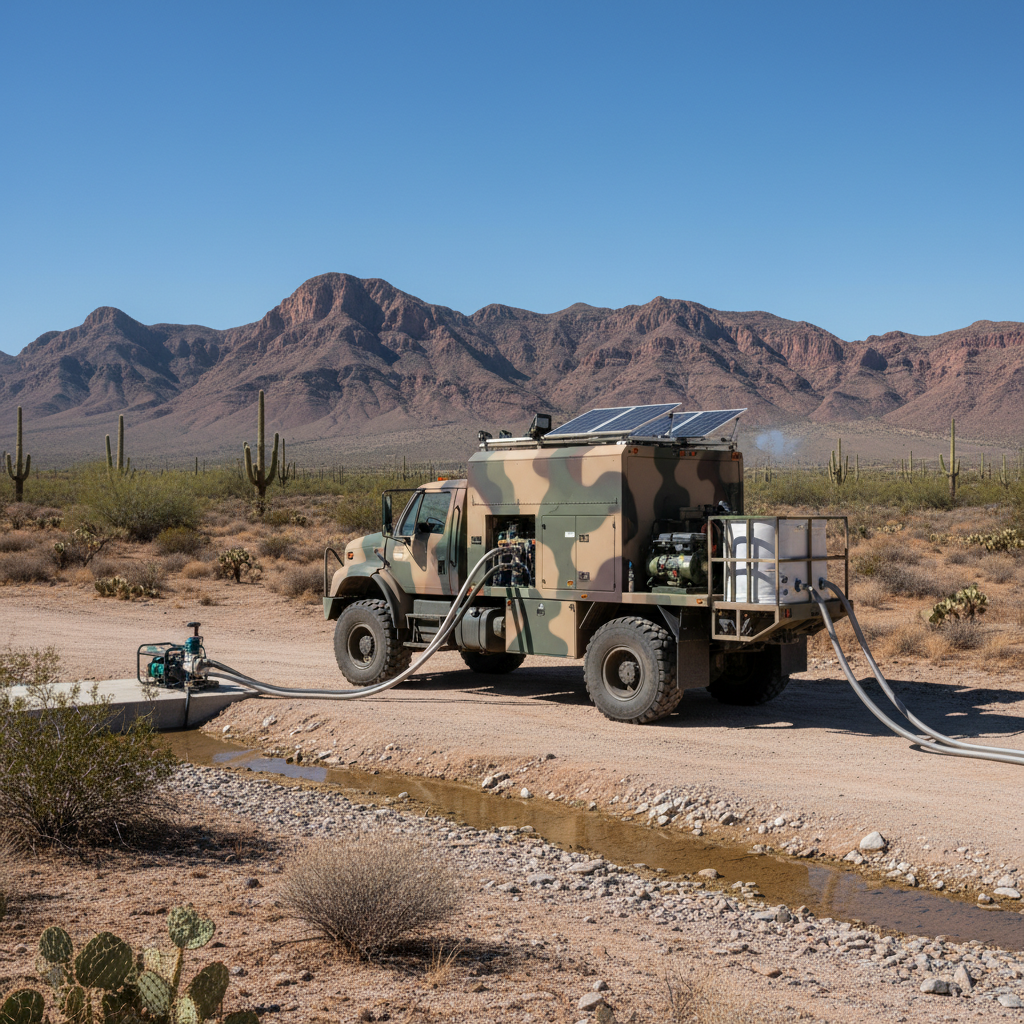
AI-generated illustration; not a photograph of the reported event.
- calendar_today May 19, 2026
The Southwest USA is making a significant investment in brackish water, allocating over $13 million to expand its brackish water projects as part of a statewide push for drought resilient water supply. With freshwater scarcity an increasing concern, officials are turning to brackish water—salty groundwater common in the region—as a sustainable alternative to support communities, agriculture, and industry without further depleting traditional water sources.
Expanding Brackish Water Projects Across New Mexico
The $13 million in funding, sourced from New Mexico’s Strategic Water Supply Program, will support three pivotal brackish water projects. Established by a $40 million legislative appropriation, the program aims to advance brackish water treatment and related technology to create a new source for the state’s water needs. Proponents believe that tapping into this enormous underground water resource could redefine water management in the Southwest, particularly as droughts become more frequent.
Major Initiatives Targeting Water Mapping and Testing
Albuquerque-based engineering firm WSP has been awarded $9.1 million to evaluate brackish water in the critical Middle Rio Grande Basin. The project involves advanced water mapping and water testing, essential steps for identifying potential sites for brackish water desalination plants in the future. These feasibility studies will help decision-makers understand where and how to best treat brackish water for various uses, from industrial applications to agricultural irrigation. Comprehensive data collection is seen as fundamental to maximizing regional water efficiency and safeguarding long-term water resources.
Innovating with Mobile Desalination for Rural and Tribal Areas
The brackish water projects also include a $3.7 million grant to Indewater, based in Albuquerque, to develop a mobile desalination pilot plant. This unit will provide rural and tribal communities throughout the Southwest USA with rapid, on-site water testing and temporary brackish water treatment. The mobile desalination concept offers crucial flexibility, allowing remote areas to assess water quality and needs before making larger infrastructural investments. By addressing local water needs quickly, these communities enhance their drought resilience and expand access to cleaner water sources.
Advanced Desalination Systems for Agriculture
A third initiative puts the focus on agriculture, a sector central to the Southwest’s economy and water use. Harmony, a startup with roots at MIT, will deploy a high-efficiency brackish water desalination system on a Lake Arthur farm. The aim is to boost agricultural water efficiency while supporting cattle health through improved water quality. This demonstration could pave the way for future agricultural brackish water treatment solutions, benefiting both farming yields and livestock management in a climate-challenged region.
A Regional Response to Water Scarcity
These brackish water projects are closely coordinated by the New Mexico Environment Department and the Office of the State Engineer. They underscore a broader regional shift towards innovative water resource management. By investing in advanced water mapping, water testing, and treatment technologies—including both fixed and mobile desalination—Southwest USA communities are working to ensure a reliable water supply in the face of climate change and recurring droughts.
Implications for Southwest USA Communities
The brackish water strategies, now underway across New Mexico and the broader Southwest, exemplify the region’s determination to diversify its water supply. By leveraging brackish water treatment and piloting new technologies like mobile desalination, local governments and partners are setting a precedent for resilience in arid environments. The success of these initiatives could serve as a model for other states confronting similar water resource challenges, strengthening sustainable water access for generations to come.