- calendar_today May 21, 2026
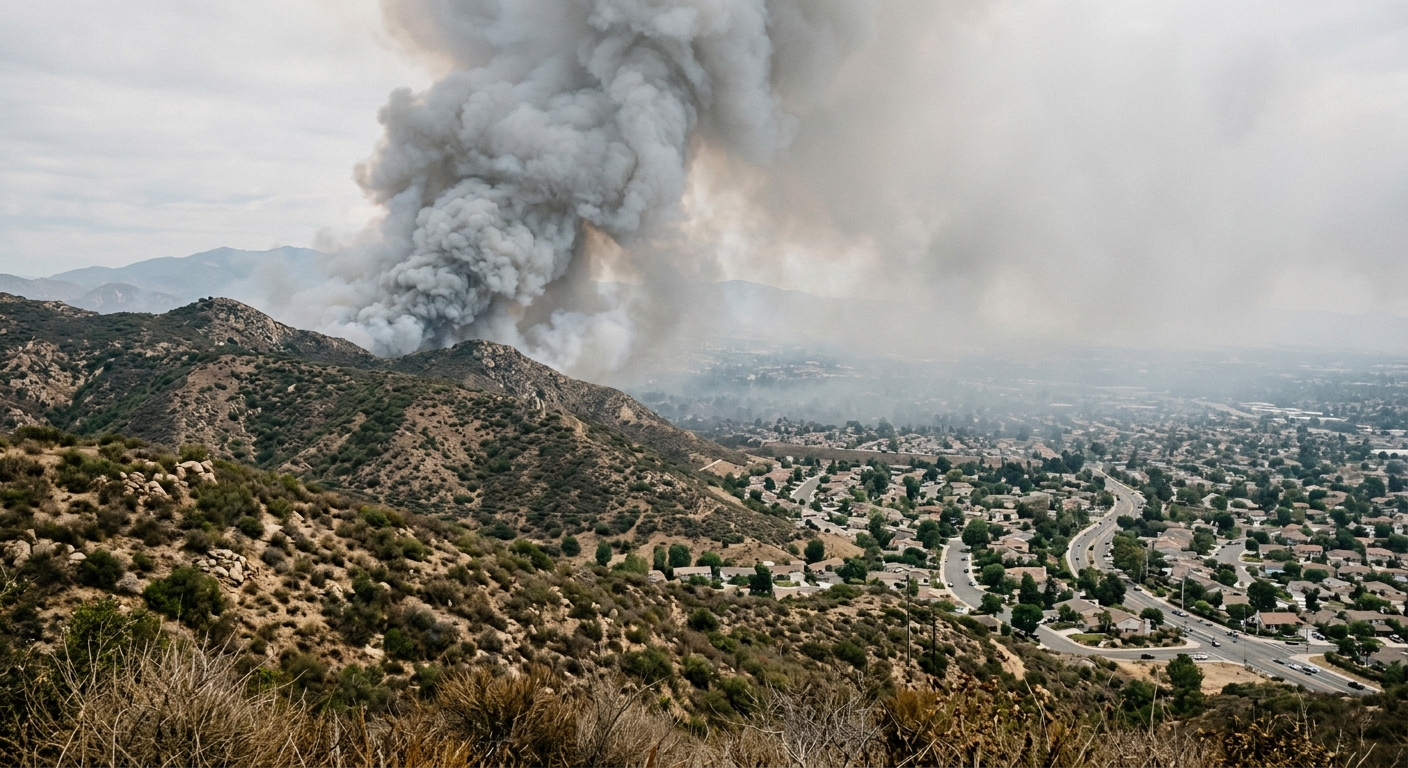
CALIFORNIA — A series of southern California wildfires have led to significant smoke advisories and declining air quality across the region, prompting a formal air quality alert that remains in effect until Thursday night. Regional emergency officials have identified multiple active fire zones whose smoke plumes are stretching from coastal communities to the heart of the Inland Empire, raising health concerns for thousands of residents.
Widespread Wildfire Smoke Prompts Smoke Advisory
The newly issued smoke advisory covers large portions of California, including Los Angeles County and the coastal valleys. Authorities point to wildfires such as the Sandy, Bain, Verona, and Santa Rosa Island fires as primary contributors to the region’s visible haze and decreased air quality. Persistent winds are carrying particles and ash far beyond the immediate burn zones, causing elevated pollution levels in both urban and rural districts.
Los Angeles County and Inland Empire Facing Highest Risk
Onshore winds have funneled smoke from the sandy fire directly into Los Angeles County, affecting neighborhoods from the San Fernando Valley to Arcadia. Air quality officials expect levels to become unhealthy for sensitive groups, including children, seniors, and those with respiratory illnesses. Meanwhile, residents of the Inland Empire—including cities like Perris, Temecula, Riverside, and San Jacinto—are reporting increased haze and a noticeable smell of smoke as a result of the bain fire and verona fire. The pollution is expected to persist, with forecasts suggesting little relief until containment improves or winds shift.
Santa Rosa Island Fire Intensifies Coastal Air Quality Impact
The santa rosa island fire has introduced new complications to air quality management, with prevailing conditions allowing smoke to settle over California’s coastal regions overnight. Limited offshore winds are providing minimal ventilation, leading to a prolonged air quality impact throughout coastal neighborhoods. Residents are urged to remain vigilant for visible ash or strong smoke odors, which signal worsening conditions.
Fire Containment Progress and Ongoing Concerns
Fire officials have provided the latest updates on containment for each blaze: the Sandy fire is at 30% containment over 2,115 acres, while the Bain fire is 39% contained across 1,456 acres. The Verona fire holds at 38% containment over 600 acres, and efforts on Santa Rosa Island have pushed that blaze to 44% containment across a vast 17,554-acre footprint. Despite progress, shifting conditions and dry vegetation continue to challenge crews across California.
Health Precautions and Community Responses
Authorities throughout Southern California are advising residents to stay indoors when possible, avoid strenuous outdoor activity, and monitor official channels for up-to-date air quality alerts. Health experts note that ash and particulate matter from wildfire smoke can exacerbate respiratory issues and pose dangers to those with pre-existing heart or lung conditions. Schools, healthcare providers, and other institutions in affected areas are adjusting schedules and offering resources to protect vulnerable populations.
Looking Ahead: Recovery and Regional Readiness
While firefighting teams continue to make headway against the flames, the broader air quality impact from these southern California wildfires remains a primary concern for both regional officials and local communities. Californians are encouraged to follow guidance from local air quality management districts and stay prepared as weather conditions and smoke patterns evolve. This season’s wildfires underscore ongoing challenges faced by California residents who live in or near vulnerable wildfire zones.