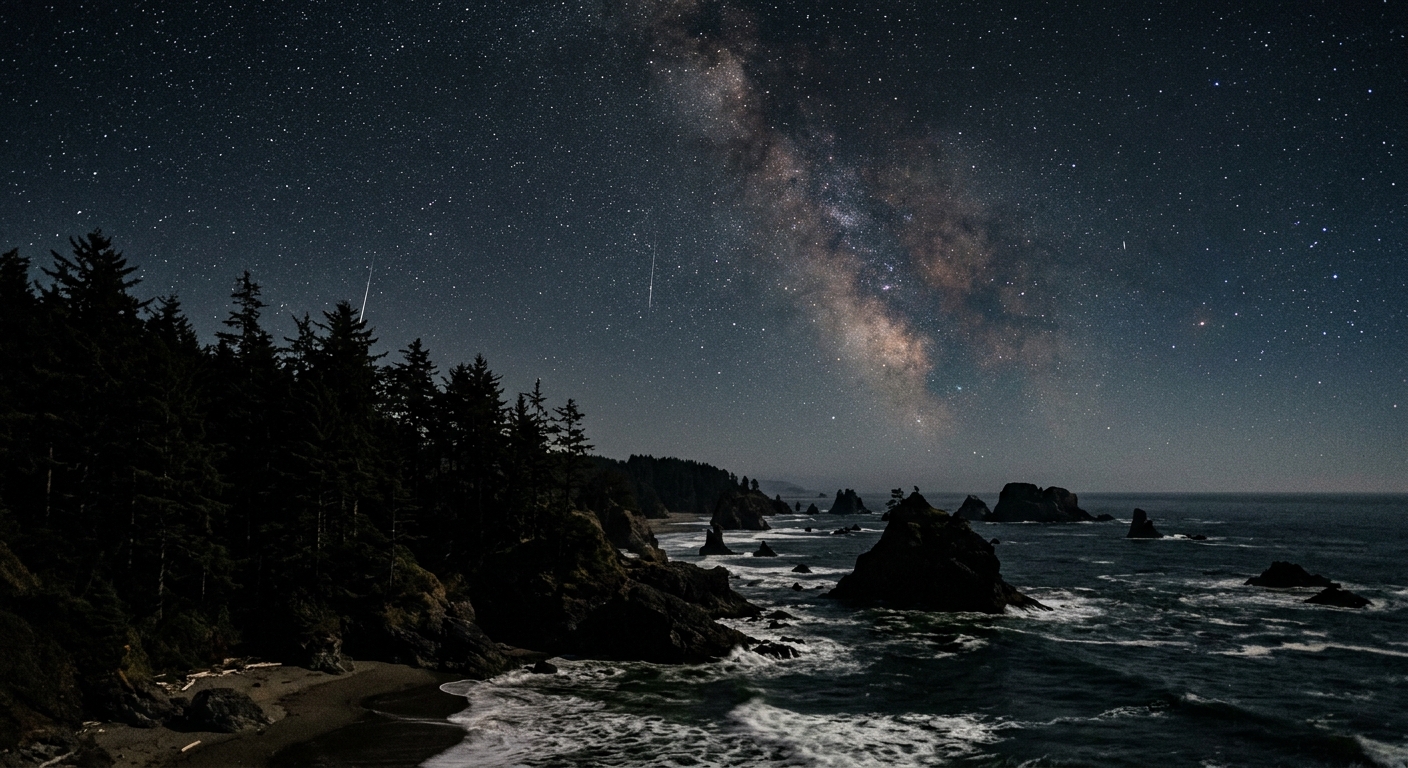
AI-generated illustration; not a photograph of the reported event.
- calendar_today August 9, 2026
The perseid meteor shower is reaching its dazzling peak across Oregon, offering stargazers a rare opportunity for clear night sky viewing between now and August 13. As one of the region’s most anticipated astronomy events, residents and visitors from the Oregon Coast to Portland are looking skyward for this annual spectacle.
Optimal Conditions Set for Meteor Shower Observers
According to Portland astronomer Jim Todd of the Oregon Museum of Science and Industry (OMSI), the Perseids are renowned for their brightness and consistency, with up to 30 to 50 meteors visible each hour from dark locations. This year’s shower is particularly notable because it aligns with a new moon phase, providing some of the darkest skies in recent memory. The moon’s absence on the night of August 12 into the early hours of August 13 offers ideal conditions for viewing the Perseid meteor shower throughout Oregon.
Best Places and Times for Night Sky Viewing
The Oregon Coast, Portland, and nearby rural areas are all expected to offer excellent perspectives on the Perseids, weather permitting. Astronomers advise escaping city lights for the clearest view, with recommendations to find an open area and allow your eyes to adjust to the dark for at least 20 minutes. Look toward the sky area between the constellations Perseus and Cassiopeia for the most fruitful meteor spotting. Along the oregon coast, several communities and resorts are hosting viewing events, helping make the most of this annual meteor shower.
The Science Behind the Perseids
The Perseids consist of debris left behind by comet Swift Tuttle as it orbits the sun. Each August, Earth passes through this stream, and fragments enter our atmosphere, burning up and producing bright streaks across the sky. Despite their speed and brilliance, Perseid meteors are harmless and create a spectacle valued by amateur astronomers and families alike in Oregon.
Astronomy Highlights: Solar and Lunar Events This Month
This year’s new moon also coincides with a rare total solar eclipse on August 12, though that event is only visible from Greenland, Iceland, and Spain—not from the Pacific Northwest. However, Oregonians will not have to wait long for another celestial treat. On August 27, the full Sturgeon Moon will bring a deep partial lunar eclipse to the Portland region. About 96% of the moon will be obscured as it rises, resulting in a dim and dramatic effect as observed from local horizons.
Travel and Accommodation for Stargazers
With interest in astronomy events growing, hotels and lodgings along the oregon coast are reporting increased demand from enthusiasts eager to witness both the perseid meteor shower and the upcoming lunar eclipse. Many regional accommodations are providing updates and tips for those planning a night under Oregon’s stars, helping visitors enjoy the best possible night sky viewing during August’s spate of celestial events.
Community Engagement and Educational Resources
Local science centers, schools, and public parks across Oregon are seizing the opportunity to host viewing parties and educational sessions. These efforts aim to connect local communities with the wonders above, using the current perseids peak as a catalyst for broader interest in astronomy. For experienced skywatchers and newcomers alike, resources are readily available to help plan and maximize this year’s stargazing experiences.