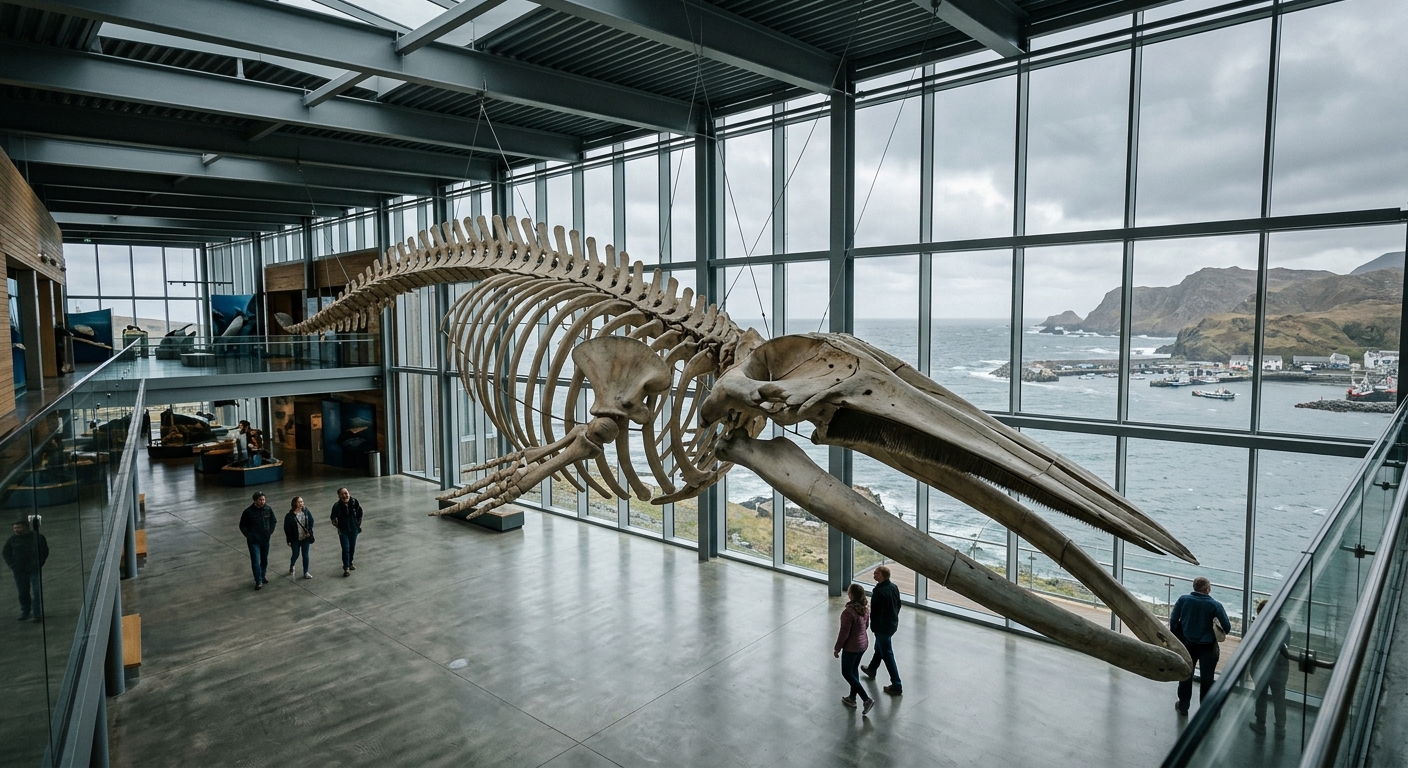
AI-generated illustration; not a photograph of the reported event.
- calendar_today July 15, 2026
In an extraordinary development for Oregon and the Pacific Northwest, a massive blue whale skeleton has been erected at Oregon State University’s Hatfield Marine Science Center in Newport. The blue whale skeleton, stretching 70 feet, now stands as one of the most significant marine exhibits on the Oregon coast and is among only five such full skeletons available for public viewing in the United States.
Oregon Coast Exhibit Celebrates Marine Giant
The unveiling of this remarkable specimen marks a milestone for regional science and education. The upcoming dedication event on July 16 at the Hatfield Marine Science Center will feature public tours, expert talks, and a series of informative sessions. Visitors can experience an oregon coast exhibit unlike any other, getting close to the world’s largest animal and learning about its role in the ocean’s ecosystem.
Inside the Hatfield Marine Science Center’s Newest Addition
The journey of the blue whale skeleton to Newport was years in the making. According to staff at the marine science center, assembling such a display involved a complex, decade-long collaboration. Donors, researchers from Oregon State University’s marine mammal institute, and a renowned Canadian preservation team all played a critical role in preparing and mounting the skeleton for educational purposes.
The Challenge of Whale Preservation
Preserving a complete blue whale skeleton is a rare achievement in the field of whale preservation. Blue whales, being endangered and immense, typically sink to the ocean floor after death, making recovery nearly impossible. The Newport specimen stands as a testament to both scientific dedication and community support on the Oregon coast.
Interactive Exhibit Features Blue Whale Sounds
One of the most engaging features of the new whale skeleton display is an interactive demonstration of blue whale sounds. Utilizing specialized equipment, marine scientists recreate the whales’ infrasonic calls — frequencies far below the range of human hearing but powerful enough to travel thousands of miles underwater. Attendees can listen to these haunting and informative sounds, feeling the vibrations that blue whales use for long-distance communication in the vast ocean. The event’s research seminar will further explore blue whale behavior and the significance of acoustics in studying this elusive species.
Advancing Research Into Blue Whale Ecology
The exhibit goes beyond being a public whale exhibit; it serves as a hub for advancing the understanding of blue whale ecology. OSU researchers are leveraging the specimen to study anatomical features, bone health, and whale response to environmental change. Educational programs connected to the hatfield marine science community offer hands-on experiences for students, educators, and visitors, reinforcing Newport’s role as a center for marine science outreach in Oregon.
A Regional Asset for Education and Conservation
The presence of the blue whale skeleton elevates Newport and Oregon’s status in marine research and conservation. By providing a rare venue for scientific learning and whale skeleton display, the Hatfield Marine Science Center encourages greater public awareness of marine mammal science along the Oregon coast. Regional schools, nature groups, and families are expected to take advantage of this new attraction, making it a central educational resource for years to come.
With this installation, Newport’s marine science hub continues to inspire curiosity and stewardship of the world’s oceans, ensuring that future generations on the Oregon coast will remain connected to the mysteries and majesty of blue whales.