- calendar_today August 10, 2025
“Images in ChatGPT” is the revolutionary feature recently introduced by OpenAI, which embeds image creation capabilities into ChatGPT’s user interface. The introduction of the GPT-4o model enables users to generate images during conversations through ChatGPT, which represents a major advancement in AI-generated content creation.
ChatGPT users on all subscription levels, including Plus, Pro, Team memberships, and the free version, can now access sophisticated image generation. OpenAI spokesperson Taya Christianson stated that free tier users experience similar usage constraints as DALL-E 3, which allows three image creations daily, but these limits might change according to demand. DALL-E users will maintain their access through a specialized custom GPT.
OpenAI’s research lead Gabriel Goh called attention to GPT-4o’s revolutionary ability to integrate multiple data formats into its processing as an “omnimodal” model that manages text, images, audio, and video. The model achieves a critical advancement through better “binding” capabilities, which resolve a long-standing difficulty in AI-generated image production. GPT-4o can manage 15 to 20 objects consistently without confusion between colors and shapes, unlike earlier models, which struggled with object and attribute relationships.
The system’s enhanced text rendering capabilities stand out as one of its major advancements. AI-generated images frequently exhibit distorted or nonsensical text according to traditional practices. According to Goh, the development process required extensive iterative work, which took several months to achieve perfection. While perfect text rendering for small text continues to be a challenge, the team has reached a consistency standard that makes text in images reliably usable.
Instead of using diffusion models and standard image generators, the system utilizes an autoregressive architecture. The image generation process that moves left to right and top to bottom, just like text creation, might improve text rendering and binding.
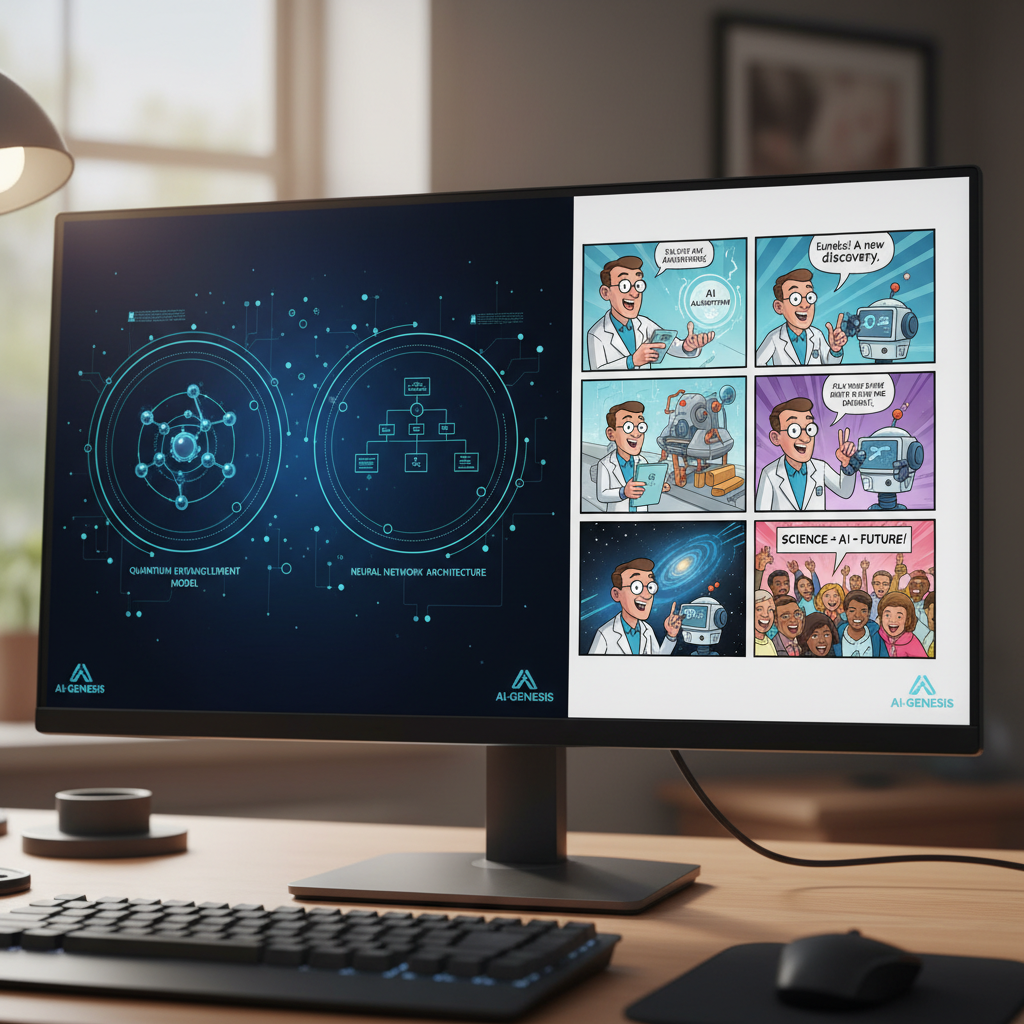
OpenAI demonstrated the multifunctional capabilities of the system by showing how it can create scientific diagrams like Newton’s prism experiment with precise labels alongside multi-panel comics with unified characters and dialogue, as well as informational posters that include accurate text. The demonstration included practical uses such as creating transparent background images for stickers, restaurant menus, and logos.
ChatGPT’s multimodal product lead, Jackie Shannon, highlighted how the system uses world knowledge to function. When she creates an image, she works within her own skill boundaries yet utilizes her comprehensive world knowledge. The model uses world knowledge during image generation, which allows users to request an image of Newton’s prism experiment without needing to describe it first.
The longer image generation time is offset by the improved quality and capabilities, according to OpenAI. Shannon acknowledged that although latency improvements remain necessary, she emphasized that the superior image quality alongside enhanced capabilities and world knowledge compensates for the extra waiting time.
Addressing Ethical Concerns and Ensuring Responsible Deployment
OpenAI addressed concerns about potential misuse by emphasizing its robust safeguarding measures. The system incorporates measures to safeguard against watermark extraction while also blocking sexual deepfake generation and denying requests for CSAM content. OpenAI created all generated images with standard C2PA metadata to identify them as their creations despite the absence of visual watermarks. The company holds proprietary tools to verify images internally.
According to Shannon, the system isn’t flawless, yet they are working on better safeguards and consider this the foundation point. All users who generate images through ChatGPT become their owners and have the freedom to use these images under OpenAI’s usage policies.
OpenAI’s “Images in ChatGPT” feature boosts both its key product’s capabilities and establishes a new benchmark for easy-to-use yet powerful AI image creation. Through enhancements in binding capabilities and text rendering as well as robust safety measures, OpenAI demonstrates its dedication to delivering a powerful yet responsibly used tool. The company’s move to employ an autoregressive method instead of traditional diffusion models demonstrates its innovative image generation techniques. OpenAI’s approach to user ownership and metadata integration demonstrates its dedication to maintaining transparency and ethical standards in AI-generated content development. This development represents a major advance toward making sophisticated AI image creation widely accessible while managing potential dangers to deliver a secure user experience.