- calendar_today August 29, 2025
Oregon is well-positioned economically in 2025 with inflation still trending in the negative direction at the national level. Following the struggle with inflation, supply chain interruptions, and shortages of labor in the past years, the reduction in inflation is serving to stimulate economic momentum. Oregon’s consumers, businesses, and policymakers are only starting to feel the benefits of the change, and the outlook is more optimistic for the coming months.
A New Beginning for Families and Businesses
Inflation has plagued American families for decades, and Oregon was no different. From food and fuel to rent and utilities, prices increased. But reports are that inflation has crept along at a slower pace recently, much to the relief of consumers. Families are finally experiencing more consistency in their monthly budgets, and consumer confidence is on the rise.
Small businesses, especially Oregon’s retail and service companies, are seeing cost savings. More stable supply chains and moderating wholesale prices mean that most companies are finally receiving some respite. Reduced inflation also has the indirect effect of reducing Federal Reserve interest rate increases, which makes borrowing cheaper for entrepreneurs looking to grow or invest in new business ventures.
Real Estate Rebounding
One of the most robust industries where Oregon is seeing economic recovery is in the housing market. The housing market slowed in previous years due to inflation and high mortgage rates. With interest rates starting to stabilize and inflation declining, sellers and buyers are coming back to the market with renewed energy.
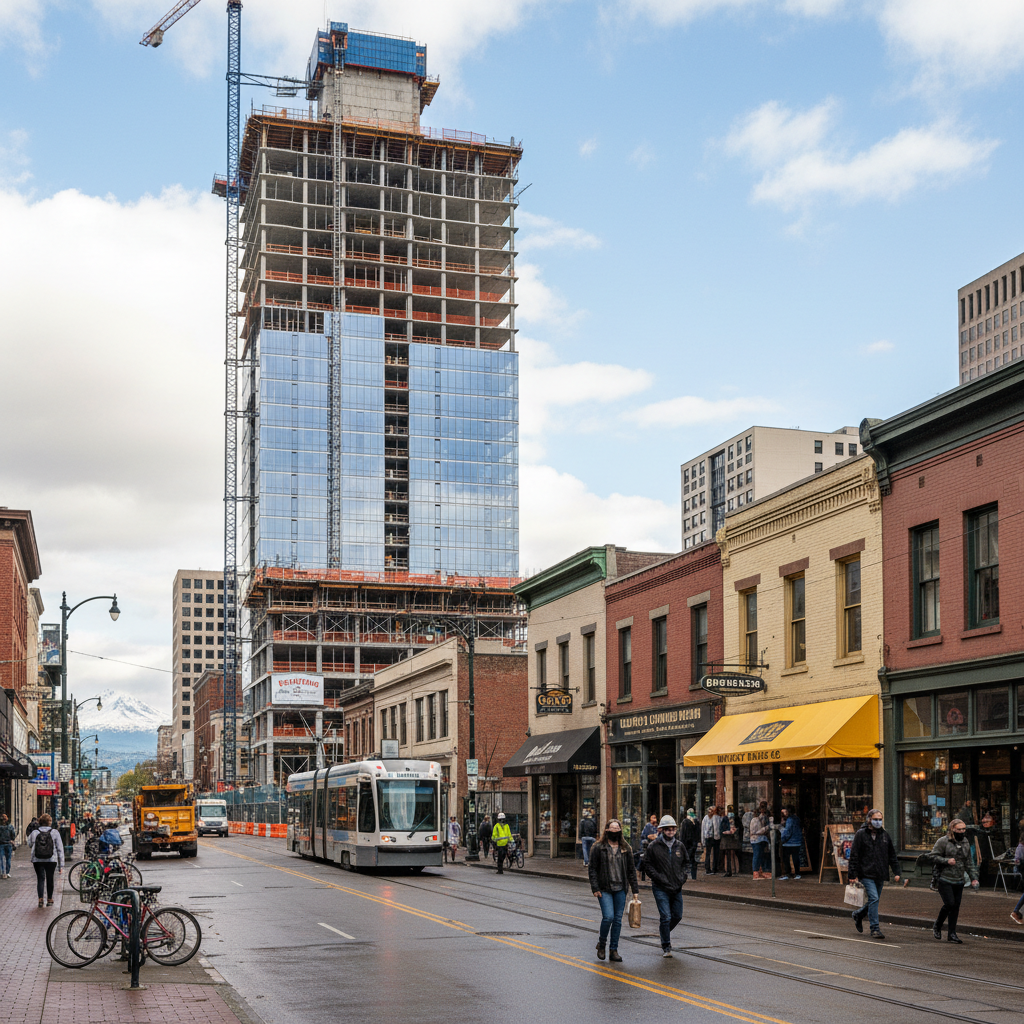
Cities such as Portland, Eugene, and Salem are experiencing their first-time homebuyers becoming more hopeful about homeownership. Builders are also becoming hopeful and continuing new home construction that had been put on hold before. This is creating construction and real estate services employment and contributing to the overall economy.
Job Growth and Wages
When inflation declines, employers are able to pay more competitive salaries without the bite of balloon overhead expenses. In Oregon, industries of healthcare, education, technology, and renewable energy are experiencing higher rates of hiring. This employment growth not only improves the economy of the state but also aids in the absorption of workers who have been laid off during earlier economic decline.
Pay is increasing modestly in various industries, lifting Oregon employees’ purchasing power. Subsequently, that added disposable income is being channeled throughout the local economy by utilizing it to buy housing, goods, and services.
A Lift for the Farming and Technology Sectors
Oregon’s very diversified economy is assisted by the ability of the state to have both a strong farm foundation and an emerging high-tech industry. As inflation eased, farmers’ operating costs decreased, especially in fuel, equipment, and transportation. This is important for a state renowned for harvesting crops like berries, hazelnuts, and wine grapes.
In contrast, Oregon’s tech community—based in and around the “Silicon Forest” just outside Portland—is once again on the rebound. Firms are hiring, investing in research and development, as the cost of capital falls. Start-up technology firms especially are receiving more funding and growth plans as venture capitalists bring their confidence in the economy up.
Central Banks Easing Off the Brakes
One of the strongest pushes for Oregon’s enhanced economic future is the changing position of central banks. Having aggressively raised rates to rein in inflation, the Federal Reserve is now indicating a more modest and tempered pace. The process is softening the crunch on borrowers and enabling additional liquidity in the market.
For Oregon, this translates into better lending terms for businesses and consumers. Whether it is a household buying a new car, a business replacing equipment, or a student heading off to college borrowing money, the lower cost of borrowing is proving to be an important driver of economic activity.
Infrastructure Investments Increasing
As inflationary pressures are now diminishing, state and federal governments are stepping up infrastructure spending that had been delayed in the past. In Oregon, it translates into improved transportation, clean energy, the expansion of broadband, and water infrastructure management. Not only do they set the state on a sustained growth path but also provide thousands of short-term jobs.
Rural and poor rural populations are specifically being helped by these initiatives, and they are acquiring increased access to employment, services, and education. This increased economic inclusion is critical for statewide sustainable development.
Consumer Sentiment Rebounding
Yet another critical element of Oregon’s economic turnaround is the resurgence of consumer confidence. As inflation declines, citizens are more likely to spend on discretionary items like vacations, dining out, and leisure activities. This boost in consumer spending benefits local business and stimulates industries hard hit by inflationary periods.
Tourism, the state’s prime industry, is also coming back again. As travel expense decreases, tourists are coming back again to prime destinations like Crater Lake, the Oregon Coast, and the Columbia River Gorge. These bring money into local economies as well as tax revenue that underwrites public services.
A Positive Outlook with Caution
Though Oregon’s economic indicators are otherwise healthy, analysts warn that there are nonetheless problems. Inflation has not yet been fully eliminated and there are some sectors—housing and health care, for instance—that continue to experience cost pressures. There are also global uncertainties such as geopolitical conflicts or supply chain anomalies that will influence future trends.
But with inflation heading in the right direction and with more favorable central bank policies, Oregon is positioned well to ride a lasting recovery. By emphasizing innovation, sustainability, and equity, the state can further develop a sturdy economy that serves all its people.
Final Thoughts
The relief of inflation is serving as a tailwind to Oregon’s economy in 2025. As consumer confidence grows and businesses are becoming stable once again, the state is recovering from current economic duress with resilience and hope. Whether it be agriculture, technology, or tourism, Oregon is claiming this economic restart, and tomorrow is brighter as a result.