- calendar_today September 3, 2025
You Know How It Feels When the Words Just Don’t Come?
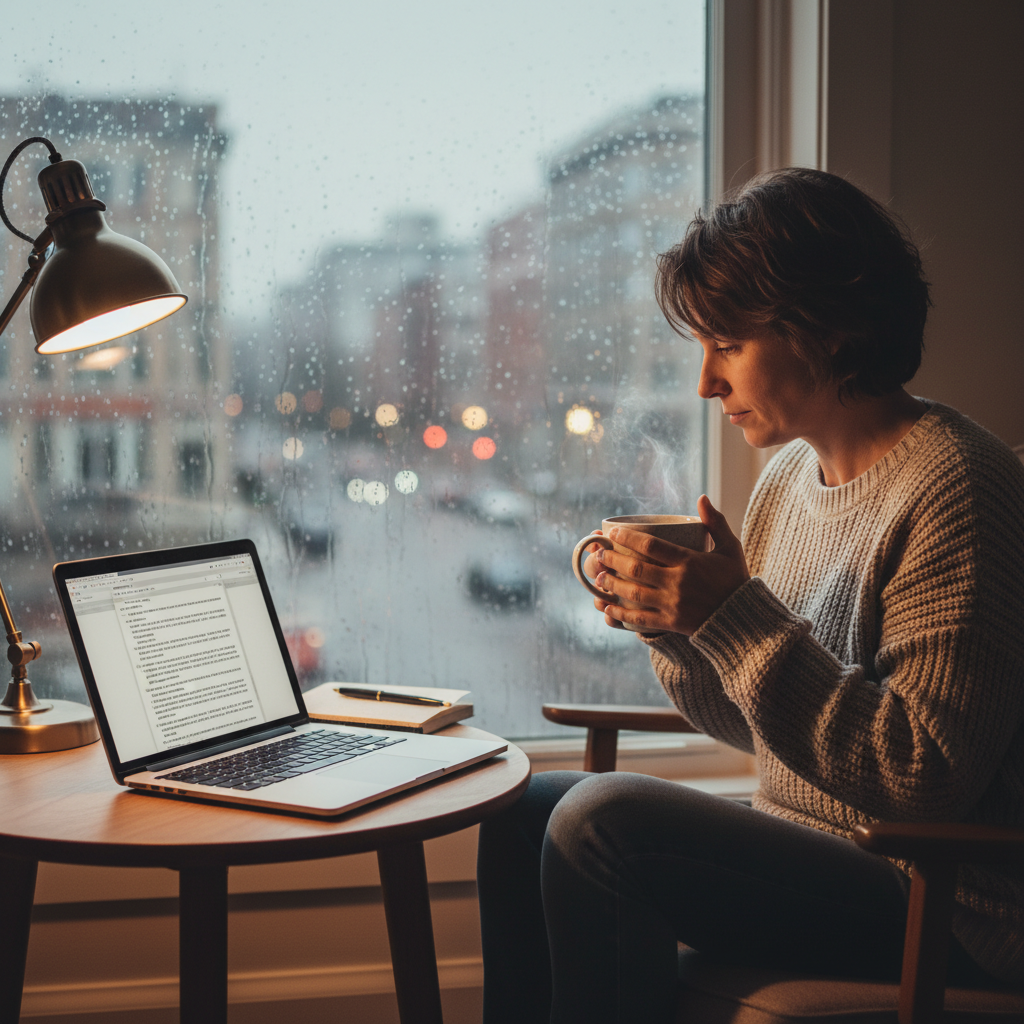
You’re sitting by the window, rain tapping steady on the glass, staring at that blank page like it personally offended you. Maybe you’ve got your favorite mug in hand, maybe a blanket over your lap, and still—nothing. The words won’t move.
That’s when it happens. You crack open one of those AI tools. Just to see. Just to nudge the story forward. And next thing you know, the draft is breathing again. The characters are walking through Portland’s fog. The tension’s back. And oddly enough? It still sounds like you.
I know—it sounds weird. But it’s happening here in Oregon. Quietly. Naturally. Like moss growing on stone. And maybe it’s not as wild as it sounds.
The AI’s Not Taking Over—It’s Just Showing Up
Oregon writers aren’t handing over the pen. Let’s make that clear. They’re still in charge of the rhythm, the weird little turns of phrase, the heavy silences between words. But when the creative tank runs dry? AI steps in with a spark.
A novelist I know in Eugene said, “I still write with my whole heart. But sometimes, AI helps me remember where it was going.” That stuck with me. Because AI-written books 2025 in Oregon aren’t about speeding things up—they’re about staying in the process when everything else feels heavy.
Why Oregon’s the Perfect Place for This Kind of Collaboration
There’s something about this state that’s always welcomed quiet reinvention. We’ve got artists in cabins, poets riding the MAX, screenwriters in Astoria working in cafes that smell like sea salt and espresso. There’s no one way to tell a story here.
So maybe it makes sense that self-publishing with AI tools feels more like a partnership than a shortcut. We’re not chasing bestsellers. We’re chasing connection. And sometimes, that means getting creative with how we get there.
Writers here are using AI to:
- Organize scenes after too many plot threads get tangled
- Break through writer’s block without the guilt spiral
- Draft filler chapters when they’ve only got thirty minutes between jobs
- Clean up clunky dialogue that doesn’t feel quite right yet
- Build outlines so they can spend more time on emotion and depth
It’s not about automation. It’s about making space for what matters most.
There’s Still Some Side-Eye—and That’s Okay
We’re a skeptical bunch, aren’t we? We compost. We read our contracts. We ask a lot of questions. So yeah, there’s some raised eyebrows about using AI in storytelling.
Some folks feel like it’s cheating. Or like we’re letting tech take something sacred and turn it cold.
But when I talked to an author out in Bend, she told me, “I used to feel that way too. Until I realized it was either use the tool or stop writing altogether.” And there it is. That gut-level truth. Because what matters isn’t how the first draft got made. It’s that the story got told.
These Stories Still Feel Like Oregon
That’s the magic part. Even with AI in the mix, the stories coming out of Oregon still feel like Oregon. Moody. Honest. A little offbeat. They smell like cedar and taste like burnt coffee from a roadside diner.
One piece I read recently took place on Sauvie Island in late October. The rain was constant, the grief was quiet, and by the last page, I was wrecked—in the best way. Found out later the writer had used AI to help shape the first draft. And you know what? It didn’t make me love it any less.
We’re Still Writing the Truth—Just Getting a Little Help Along the Way
Oregon’s always been a haven for the in-between. The almosts. The nearly-forgotten notebooks. The late-night thoughts whispered into fog. If AI helps us keep those stories alive—keeps us writing even when the day’s been too much—then maybe it’s not a threat.
Maybe it’s just another way we’re learning to adapt. To keep the pen moving. To stay tethered to what makes this place, and its people, so deeply human.
And if the final chapter still makes someone cry under a wool blanket on a rainy night… well, that’s what it’s all about.