- calendar_today August 14, 2025
.
EV adoption in the US is starting to face new headwinds as sales decelerate and infrastructure hurdles come to the fore. After more than a year of strong sequential growth in EV sales, sales appear to be contracting. Genesis and Volvo are two marques that have already felt buyers walk away from their electric vehicles, with both brands now reconsidering their EV lineups. Political uncertainty has also come into play as the Biden administration has already dialed back subsidies while also rolling back vehicle pollution standards, resulting in less federal buyer incentives.
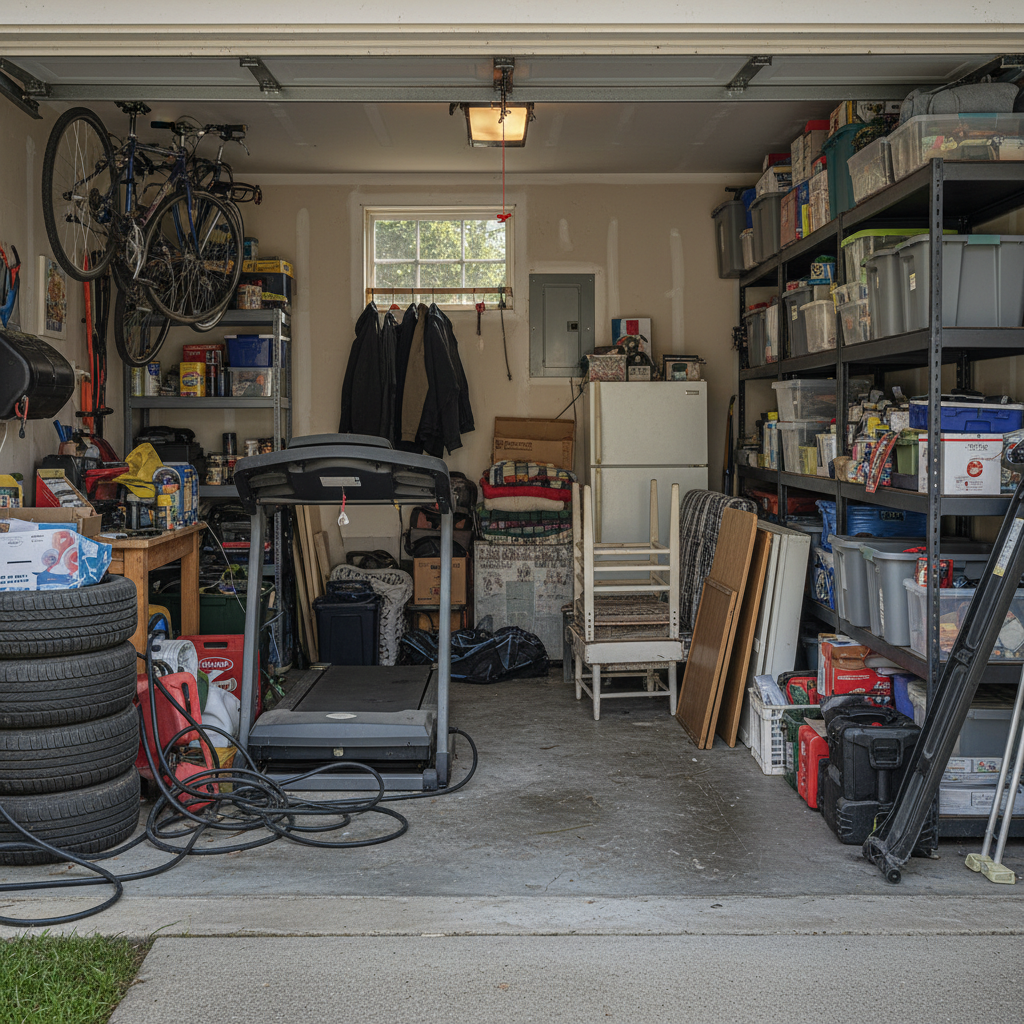
But a new industry research note suggests that the largest barrier to EVs may not come from the government or the showroom floor but rather from the homeowners’ garage.
Charging Where You Park
Survey research has long made charging availability one of the top consumer barriers to EV adoption. But a new market research note by Telemetry VP Sam Abuelsamid looks at the issue in more detail and cites an underappreciated culprit: garage usage.
Much has been written about fast-charging stations and the need to expand this charging network. But despite the fanfare, the majority of EV charging still takes place at home. AC charging is used for about 80 percent of all EV charging sessions, most of it at a single-family residence. The National Renewable Energy Laboratory (NREL) estimates that 42 percent of homeowners already have an outlet nearby capable of supporting level 2 (240-volt) charging.
That figure could rise significantly, to 68 percent, if homeowners cleared some space in their garages and changed their parking behavior. “90 percent of all houses can add a 240 V outlet near where cars could be parked. Parking behavior, namely whether homeowners use a private garage for parking or storage, will likely become a key factor in EV adoption,” wrote Abuelsamid.
Were garage spaces dedicated to vehicles rather than storage, the number of homes with the capacity for EV charging would jump from 31 million to over 50 million. Factoring in the number of homes where wiring is feasible, this figure could swell to over 72 million. That is a higher ceiling than even Telemetry’s most bullish EV adoption forecast to 2035, which projects anywhere between 33 million and 57 million EVs in the US.
In practice, though, the capacity on paper doesn’t immediately translate to readiness on the ground. In the same NREL study, the report also estimated that nearly 34 million homes would need to undergo an expensive electrical upgrade to support a level 2 charger, which typically requires at least 30 amps of power. These upgrades, which could range from new wiring to complete electrical panel replacements, can cost the homeowner thousands of dollars.
In other words, a car that is supposed to save a household money over the long run may see its total cost of ownership quickly equal or even exceed the total cost of owning a traditional gas-powered car when the cost of electrical wiring is factored in.
The above is a tall order for the one in four Americans who live in multifamily homes, including apartments, condos, townhomes, and co-ops. These buildings generally don’t offer individual EV owners the latitude to simply install chargers. Instead, they have to ask permission from their landlords, housing management, or co-op boards—permission that may be far from forthcoming.
The financial barrier to charger installation is even higher. Installing a pair of shared level 2 chargers at a co-op building, for instance, may first require the entire building to undergo an electrical panel upgrade, a project that can cost millions of dollars. Wiring has to be run all the way from the electrical room to distant parking spaces, further increasing costs. Residents of such properties are also often not eligible for municipal or utility incentives to offset charger installation costs.
Right now, there are about one million EVs in multifamily households, but only 11 percent of them are parked close enough to an outlet to charge. State mandates requiring 20–25 percent of parking spaces in new apartment complexes to be EV-ready may improve the situation, but Telemetry still estimates only 6.7 million to 11.4 million charging-capable spaces in multifamily housing by 2035. This is a far cry from the projected number of EVs expected to be in multifamily residences by then.
Public Charging Catch-up
Factoring in the limits of home charging, public infrastructure will become essential. Telemetry estimates that between 11.7 million and 14.3 million EV drivers who own homes will still be using public charging by 2035. Another 7.8 million to 8.1 million EV drivers who live in multifamily residences will also need to use public chargers.
Meeting this projected demand will require between 523,000 and 586,000 DC fast chargers, plus another 1.5 million to 1.6 million level 2 chargers nationally. But rolling out this much new infrastructure has its own problems. The power grid is already under strain, with AI data centers also clamoring for generation and distribution capacity, making the construction of large charging sites more challenging.
After a period of rapid optimism about EVs, the US adoption story is likely to be more complicated than first thought. While there is potential for tens of millions of American homes to have the wiring to support EV charging, garage clutter, high electrical upgrade costs, and multifamily household living all pose risks to adoption rates. And despite ambitious plans for rapid charging station expansion, demand is set to outstrip supply in the coming decade.
For now, one thing is clear: America’s future EV adoption may depend as much on homeowners’ garages as it does on Washington or automakers’ plans.