- calendar_today August 26, 2025
What’s Driving Dow Jones Futures in 2025?
Dow Jones Futures offer an early signal of market sentiment—and for Oregon, a state with deep ties to global trade, semiconductor manufacturing, clean energy, and agriculture, those signals carry significant weight. In 2025, investors across the state are balancing inflation risks, interest rate projections, and sector-specific growth opportunities as global and national dynamics shift.
Economic Drivers Behind the 2025 Outlook
Oregon enters 2025 with continued economic resilience, powered by its advanced manufacturing sector, Portland’s tech and startup scene, and strong agricultural exports. However, high costs, shipping bottlenecks, and inflation remain challenges.
- U.S. GDP growth is projected at 2.1–2.4% for 2025 (Bureau of Economic Analysis).
- Inflation remains slightly above the Federal Reserve’s 2% target, with housing, healthcare, and energy prices putting pressure on Oregon households and businesses.
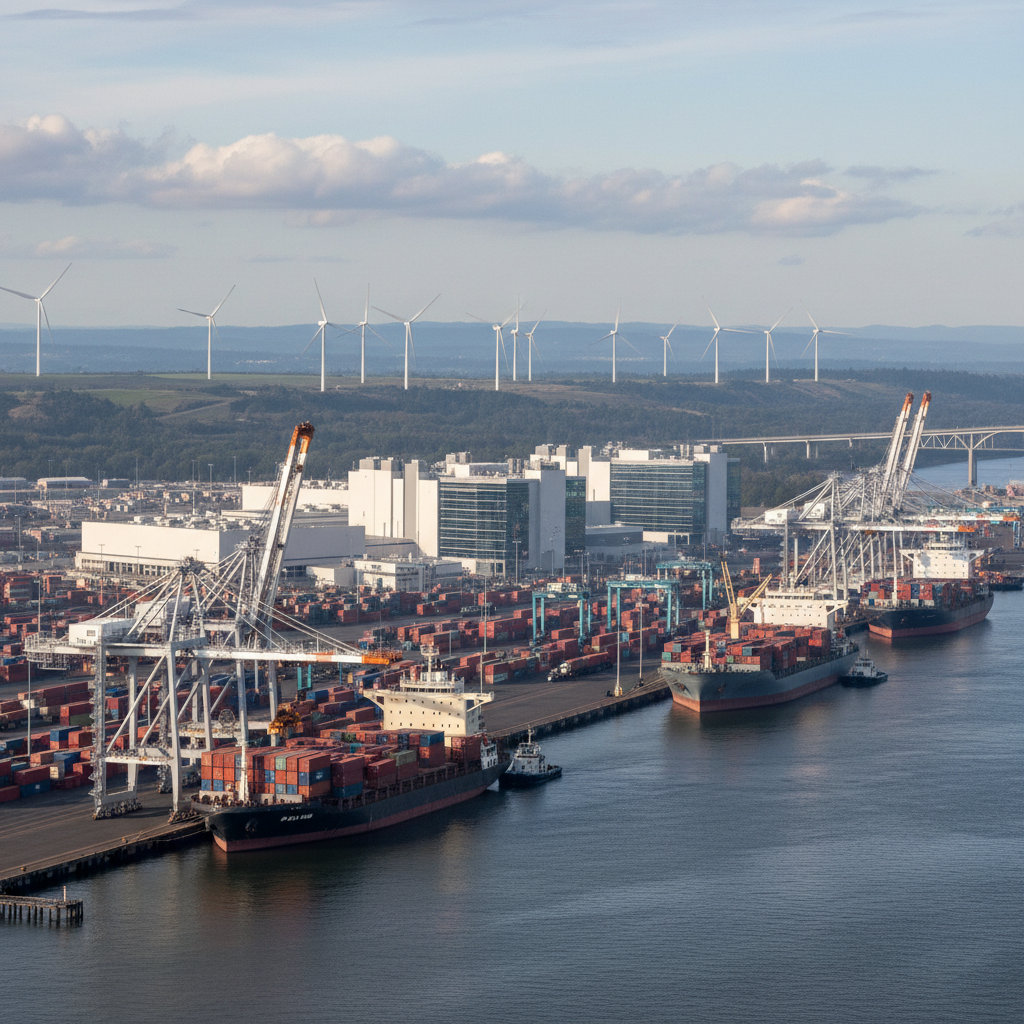
- Post-pandemic supply chain shifts continue to affect semiconductor production and agricultural exports through ports like Portland.
Federal Reserve Policy and Interest Rate Projections
The Federal Reserve’s rate decisions are closely watched in Oregon, particularly by those in real estate, green energy, and capital-intensive industries. With consumer demand and housing still robust, lower interest rates could help unlock further economic expansion.
- Current Fed Funds Rate: 4.25%–4.50%.
- A potential rate cut by September—currently priced in at 67%—could reduce financing costs for housing development, infrastructure projects, and startup investment.
- Inflationary pressure, particularly from tariffs and energy inputs, may complicate the Fed’s timeline and keep capital costs elevated longer than hoped.
Global Economic Uncertainty and Its Ripple Effects
As a major exporter and home to global manufacturing partners, Oregon is particularly sensitive to international market shifts. Movements in Dow Jones Futures often mirror global tensions that directly affect local industries.
- New tariffs on Chinese and Brazilian goods, introduced in July 2025, are raising costs for electronics, apparel, and agricultural equipment.
- China’s weak recovery is curbing demand for Oregon-grown products like hazelnuts, wine, and tech components.
- Middle East tensions are fueling oil price spikes, raising transportation costs for exporters and logistics providers across the state.
Sector-Wise Breakdown: Technology, Energy, and Healthcare
Oregon’s sector mix increasingly reflects national Dow trends, particularly in technology and healthcare, while also facing unique pressures tied to energy and agriculture.
- Semiconductor and software firms, including key Intel operations, are mirroring national gains from Dow tech leaders like Nvidia and Microsoft.
- Energy volatility continues to challenge industrial and agricultural operations, though Oregon’s investment in renewables provides some insulation.
- Healthcare sees steady growth, particularly in urban areas like Portland and Eugene, amid rising demand and aging demographics.
Investor Sentiment: What the Data Tells Us
Oregon’s investor landscape includes tech professionals, startup founders, agricultural investors, and retirees—all responding to national indicators and local realities.
- AAII Investor Sentiment Survey places national optimism around 45%.
- ETF flows reflect cautious optimism, with inflows focused on healthcare, clean tech, and defensive consumer sectors.
- Market breadth remains narrow, with many investors waiting for clearer signals before shifting allocation.
7 Predictive Outlooks for Dow Futures in 2025
These seven trends are expected to shape Dow Jones Futures and influence investor decisions across Oregon this year:
- Volatility spikes are likely around Fed policy announcements and global trade developments, with Dow Futures swings of ±1–2% anticipated.
- A September rate cut, with a 67% probability priced in, could benefit Oregon’s real estate market and support industrial expansion.
- Tariff-related inflation may pressure margins in agriculture, apparel, and electronics manufacturing.
- Sector divergence will persist—tech and healthcare remain strong, while energy and trade-exposed industries face mixed outcomes.
- A weaker dollar could support Oregon’s export sectors—if global demand stabilizes.
- Labor market resilience, especially in skilled trades, healthcare, and logistics, supports spending but adds inflationary pressure.
- Investor sentiment will remain reactive, tied to inflation updates, interest rate decisions, and global risk factors.
How Should Investors Prepare for the Year Ahead?
Oregon-based investors in 2025 should look to balance regional strengths with macroeconomic uncertainties. A flexible, sector-focused strategy will be key.
- Prioritize sectors tied to Oregon’s growth—semiconductors, healthcare, renewables, and logistics.
- Use Dow Futures and options to hedge or capitalize on short-term market swings.
- Watch for local signals—such as export volumes, semiconductor output, and port activity—to guide investment timing.
A Year of Watchful Optimism
Oregon stands at the intersection of technology, trade, and sustainability. In 2025, Dow Jones Futures reflect broader forces shaping the national and global economy—but for Oregon investors, understanding regional nuances and sectoral strengths may offer the best path forward through a complex financial landscape.