- calendar_today September 1, 2025
Honda is no more just a car manufacturer. With its first successful launch and landing of a reusable rocket this week, the Japanese manufacturer made a significant advancement in its developing interest in space technology.
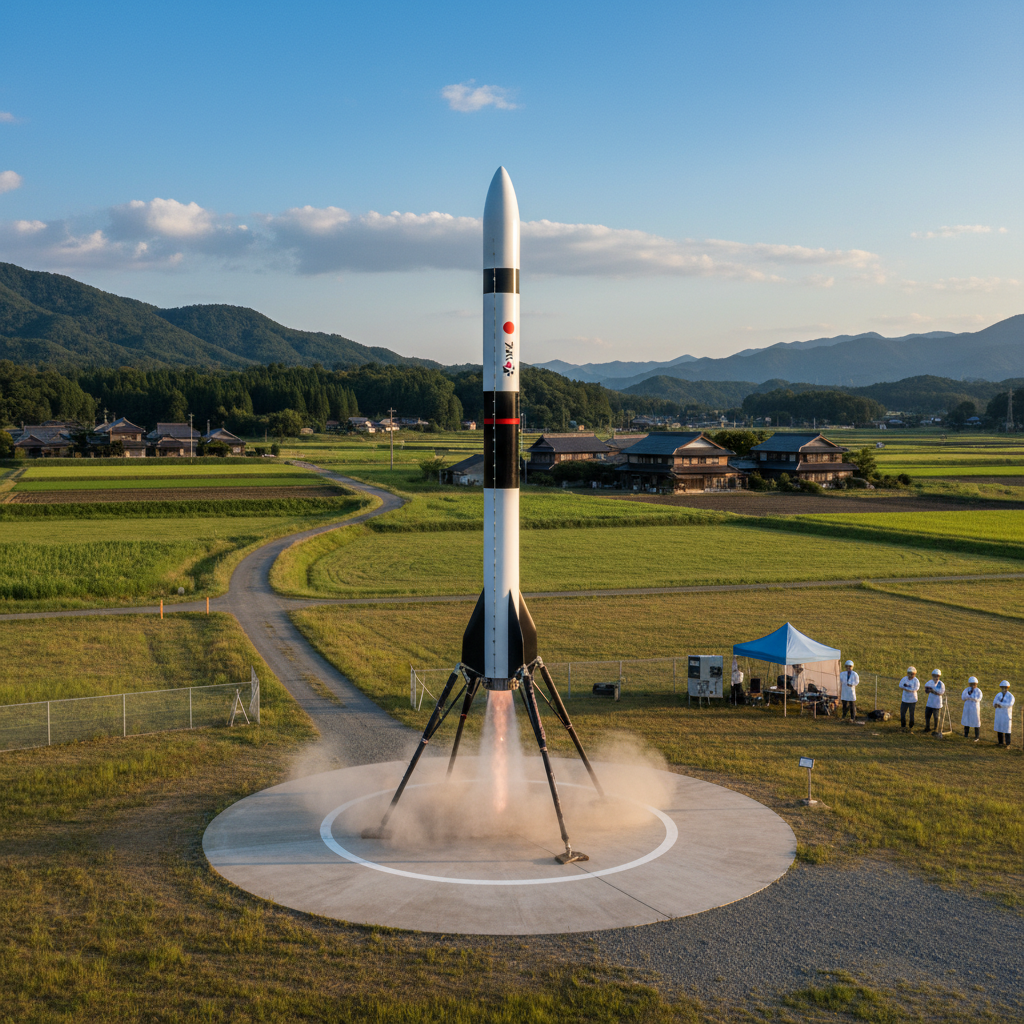
The test was carried out at Taiki Town, a little area in Japan’s Hokkaido region that has been establishing itself as a national space development center. Designed by Honda’s R&D division, the experimental rocket soared 890 feet before gently descending and landing. Touching down on four retractable legs, it landed remarkably precisely, barely 37 centimeters from the intended target point.
Rising almost 21 feet in height and weighing more than 2,800 pounds, the rocket stayed in the air for 56.6 seconds. For a company still mostly new to the aerospace industry, the clean liftoff and pinpoint landing mark are a major achievement.
From Roads to Rockets
Honda first expressed interest in space back in 2021; updates on its development have been rare. The company has handled this endeavor in a quite Honda manner—quietly and methodically. Rather than starting from nothing, the company is using technologies it already knows well—especially from its work on robotics and automated driving systems.
Those systems, which depend on sensors, artificial intelligence, and real-time data interpretation, are being modified to control flight stabilization and rocket direction. Using automation ideas developed for self-driving cars to support spaceflight, Honda is clearly moving its knowledge from road to air.
This excellent test indicates that the strategy is working. Though it’s deviating from established aerospace companies, it demonstrates that Honda is committed to joining the space industry.
The Larger Vision: Suborbital Launches by 2029
Although this test seems little in scope, it fits into a far more expansive view. Honda is aiming for suborbital space and has sights there by 2029. This entails learning to launch rockets that pass more than 62 miles above sea level, outside the Earth’s atmosphere.
Although they are not sufficient to place satellites into orbit, suborbital flights are vital for testing technologies and compiling actual data. These flights are a stepping stone to maybe commercial uses in the future and help Honda improve its systems before trying more challenging missions.
Right now, Honda has not stated any commercial intentions for its rocket project. Everything is still in the research and development stage; there are no guarantees the business will finally provide space launch services. Still, the project has a strategic drive.
Like many tech-driven businesses, Honda sees the rising demand for satellite infrastructure. Data transmission, communication networks, and GPS systems all depend on satellites; thus, having the capacity to use them would help Honda in several spheres of business. That covers smart mobility, linked cars, and logistical systems.
The issue now is whether the business will commit to growing this initiative and finally face heavyweight rivals like SpaceX and Blue Origin. Along with larger rockets, that stage would call for more infrastructure, long-term planning, and financial commitment.
Honda has shown in the meantime that it can not only construct a rocket but also land it with almost flawless accuracy.
Though what comes next is yet unknown, one thing is certain: Honda landed exactly on target after making its first actual space trip.