- calendar_today August 31, 2025
The most popular messaging app in the world, WhatsApp, is now serving ads — a milestone since the app launched in 2009. Until now, the company has maintained a clean, user-focused interface, avoiding the kind of interruptions that define many social apps. Now, the company is testing ads in a limited capacity.
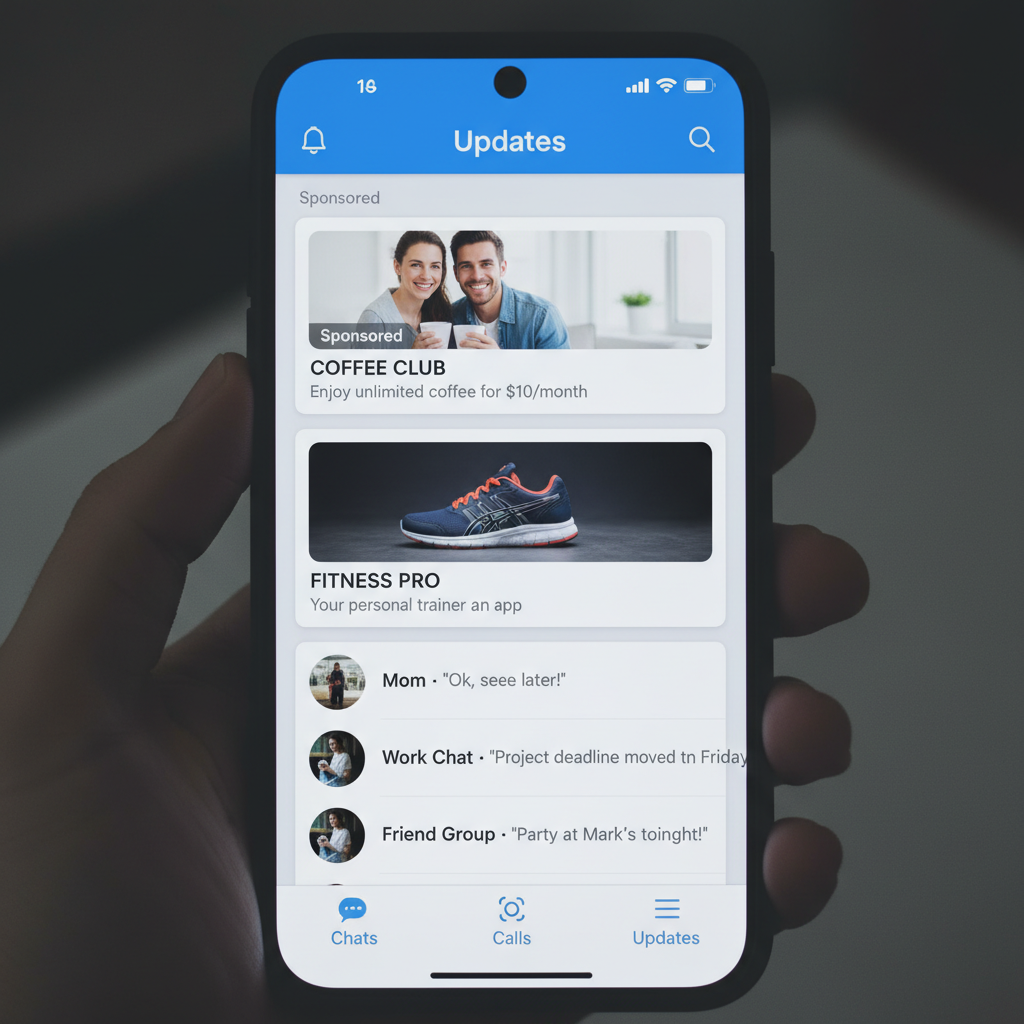
Meta, WhatsApp’s parent company, says the ads will begin appearing in the app’s “Updates” section. It’s a part of the app where people share short-lived status updates and follow channels related to their interests. Meta says these new ad placements won’t appear in your chat feed or group chats. Your messaging remains unaffected, as ads are only being shown in places people voluntarily visit.
In an interview with TechCrunch, Meta says the Updates tab sees 1.5 billion people every day, which is a significant amount of reach for advertisers. But for users who don’t regularly check status updates or follow channels, the ads may fly right past. For people who regularly check the Updates tab and follow channels, the promotional messages will be a new feature of the experience.
WhatsApp will have three kinds of ads. First, there will be promotional status updates in the Status section, which is where people share photos, videos, or voice notes that disappear after 24 hours. Users will start seeing content shared by advertisers, alongside those from friends. They’ll be able to reply to the ads directly in the chat.
Second, the company is introducing a new type of promoted channel. This new product allows channel administrators to pay to boost their presence within WhatsApp. It’s designed for creators, businesses, and organizations looking to grow their reach without relying on other platforms.
Third, WhatsApp is introducing a new paid subscription feature. Businesses can offer exclusive content through paid channels. For example, users can subscribe to a cooking channel for a monthly fee and receive premium recipes or early access to updates. Meta says this new product allows businesses to build closer connections with their followers while creating a new revenue stream for both Meta and creators.
Monetizing While Maintaining Privacy
The shift raises privacy concerns, as WhatsApp has always positioned itself as protecting users’ privacy. Meta says your messages will remain fully end-to-end encrypted, and ad targeting won’t be based on your messages. Rather, ads will be shown based on things like your age, country code, language settings, and your location to the city level.
Beyond that information, WhatsApp will also use data about how you interact with the Updates tab — for example, what channels you follow and what kinds of content you engage with. That data will help WhatsApp more precisely show you ads. All of this happens without accessing private messages.
If you link your WhatsApp account to Meta’s Accounts Center, you can allow more data sharing between Meta platforms, like Facebook and Instagram. This is off by default, and you can disable it at any time. If you do link your accounts, ad preferences and behavioral signals from other Meta platforms can be used to target ads on WhatsApp.
Users will also have the ability to see why a particular ad was shown to them, adjust their ad preferences, block certain advertisers, or report inappropriate content.
Meta’s shift to advertising comes at a time when other tech companies are making similar moves. Meta has been making money through WhatsApp for some time now, with its Business Platform and Facebook or Instagram ads that direct people to WhatsApp conversations. But on an investor call last week, CEO Mark Zuckerberg said the company still wants to find more ways to monetize WhatsApp directly.
In a new interview with TechCrunch, WhatsApp’s VP of Product, Alice Newton Rex, called the shift a “natural evolution.” She said that people are already making business conversations on WhatsApp through the Business Platform, and that many companies have asked to increase their presence in the app. With those features already present, adding ads to the Updates tab made sense.
The new shift mirrors moves by other platforms. Discord recently started rolling out ads, and Reddit recently turned a profit thanks to its advertising business. Meta’s revenue largely comes from ads, at around 98% of its business. WhatsApp was acquired for $16 billion in 2014, and the company is now actively looking for a return on that investment.
For the average WhatsApp user, the change may not make a big difference. They’re likely to continue using the app for chat, without being affected by the ads unless they check the Updates tab regularly. As Meta continues to look for ways to monetize WhatsApp, the app may undergo a larger transformation.