- calendar_today August 20, 2025
.
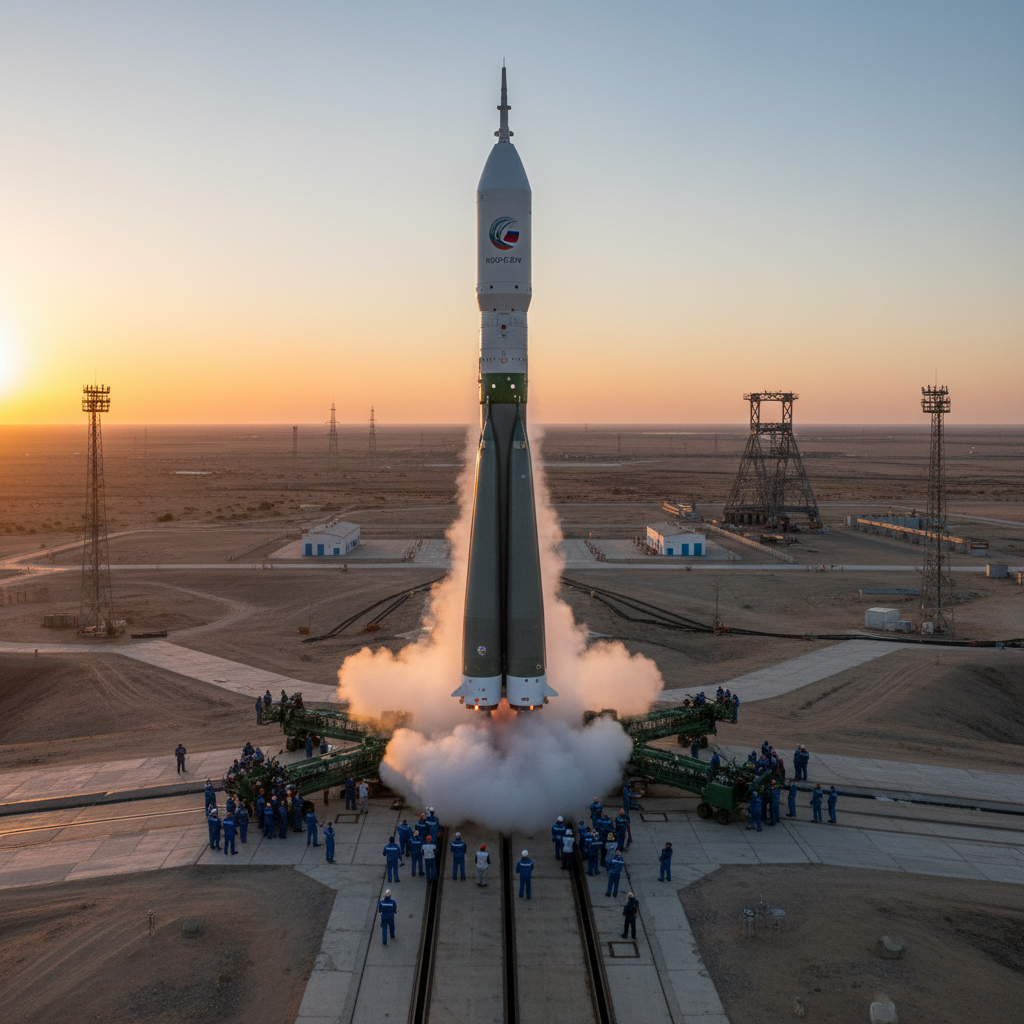
Russia is expected to conduct the first liftoff of its latest rocket, Soyuz-5, before the end of this year. Dmitry Bakanov, the head of Roscosmos, confirmed as much during an interview with the state-owned news agency TASS last week.
“Yes, we are planning for December,” Bakanov told TASS in response to a question. “The preparations for the first liftoff are practically completed,” he added, noting that Soyuz-5 will take off from the Baikonur spaceport in Kazakhstan. This launch will represent a true test flight of the rocket, which has been under development for more than a decade. Roscosmos envisions several test launches for the new rocket before putting it into operational service sometime around 2028.
In many respects, the Soyuz-5, which is also known by the name Irtysh, is not entirely new. Instead, the design is a close cousin to Zenit-2, a rocket first designed in the 1980s by the Yuzhnoye Design Bureau in Ukraine. Zenit rockets were assembled in Ukraine but flew RD-171 engines manufactured in Russia. At the time, this counted as one of the few areas of post-Soviet collaboration in aerospace. Russia’s invasion of Ukraine in 2022 put an end to that relationship. In late 2023, Russian forces bombed the Ukrainian facility that used to assemble Zenit rockets.
Soyuz-5 is essentially a domestic replacement for Zenit, which was discontinued after Russia annexed Crimea in 2014. The redesign has brought production of key components back to Russia and removed Ukraine from the supply chain. For the Kremlin, that change amounts to a strategic victory, as it has ended years of dependency. At the same time, the emergence of Soyuz-5 paves the way for phasing out an older launcher: Proton-M.
A Bridge Between Past and Future
Technically speaking, Soyuz-5 could be described as a medium-lift rocket. It is capable of delivering some 17 metric tons to low-Earth orbit (LEO), a performance increase made possible by increasing the size of the rocket’s propellant tanks over the Zenit model. Underneath, the rocket is powered by the RD-171MV engine. This latest member of the family has been in development for many years.
This engine’s lineage dates back to the Energia launch vehicle of the 1980s, which was the propulsion system of the Soviet Union’s ill-fated space shuttle Buran. The newest RD-171MV’s key feature is the absence of any Ukrainian parts. The engine runs on a combination of kerosene and liquid oxygen, and produces more than three times as much thrust as the Space Shuttle main engine used by NASA during the last space shuttle missions. By this measure, the RD-171MV is the most powerful liquid-fueled rocket engine in active service.
Soyuz-5, however, is an expendable rocket. SpaceX’s Falcon 9 rocket, as well as newer players in the launch industry, are purpose-built to be reused. The difference is remarkable, and it is unclear whether Soyuz-5 will capture a significant portion of the international market.
The rocket still has an important role for Roscosmos. With limited funding, caused by war expenses and international sanctions, Russia has struggled to develop a brand-new reusable rocket. The Amur project (a.k.a. Soyuz-7) was supposed to fill this gap, with a reusable first stage and methane-fueled engines. Amur would be able to compete with SpaceX in terms of cost, making Russia a more attractive option for commercial launches. But delays have set the project back by years, with its first flight not expected until at least 2030.
In the meantime, Soyuz-5 acts as a stopgap. The launch vehicle bridges the gap between the Soviet past and an uncertain future. The commercial picture is less optimistic. The launch industry has changed significantly over the last decade, with SpaceX, and increasingly Chinese launch providers, making cheaper and more flexible services available. Russia operates its Soyuz-2 rockets for crewed missions to the International Space Station and Angara rockets for larger missions, but neither has managed to capture a significant share of the commercial market. Whether Soyuz-5 can break this trend remains to be seen.
The fact that Roscosmos was able to advance Soyuz-5 toward a launch under difficult conditions is a notable accomplishment in its own right. A successful mission in December would show the world that Russia can still get new hardware on the launchpad, even when faced with sanctions and budget shortfalls.
The Soyuz-5 rocket may not signal a revolution in spaceflight, at least in terms of technology. But for Russia, it does carry political and industrial significance. It is the first step on the road to becoming more independent from foreign technology. And it is a bridge to the future, even if the future is still defined by Amur, or by another generation of Russian rockets, which are still on paper only.