- calendar_today August 11, 2025
The Federal Reserve’s slowdown on interest rate reductions is met with responses from Oregon businesses, its housing market, and consumers as they cope with economic volatility.
Oregon’s economy is also experiencing the ripple effects of the Federal Reserve’s recent move to hold off on interest rate cuts, as businesses, homeowners, and consumers in the state are adapting to the new financial landscape. In light of the Fed’s hinting at two possible rate reductions by the end of this year, many in Portland, Eugene, and Salem are anticipating both opportunity and hardship.
Keeping interest rates unchanged is the choice made by the Federal Reserve in an effort to fight inflation while still boosting a slowing national economy. For Oregon’s most important industries—technology through farming—the effects of sustained higher borrowing costs could determine the future of Oregon’s economy.
Impact on Oregon’s Key Sectors
Oregon’s diversified economy relies on industries like technology, agriculture, and manufacturing, which react differently to interest rate movements. The Federal Reserve’s decision to hold back on rate cuts is already impacting investment choices, borrowing, and consumer spending.
1. Technology and Innovation
Being a center for technology and semiconductors, Oregon’s tech sector is greatly dependent on capital investment to spur research and development. With high interest rates, however, some Portland-area tech companies are delaying expansion plans or reducing hiring.
Startups and small technology firms are especially exposed to the impact of higher borrowing costs, as most depend on venture capital or loans to fund expansion. The hiatus in rate cutting raises the cost of operating and can hamper innovation throughout the region.
2. Agriculture and Rural Economies
Agriculture continues to be a bedrock of Oregon’s rural economies. Willamette Valley and other agricultural communities rely on credit to buy farm equipment and cover seasonal expenses. As interest rates remained constant, the price of agricultural loans remains high, cutting into profit margins for small- and mid-sized farms.
Certain farmers are concerned that if cuts in rates don’t come within a while, their cost of operation might escalate further, leading them to slash investment in new technology or environmental-friendly cultivation practices.
3. Manufacturing and Trade
The manufacturing industry of Oregon, covering from wood products to car parts, also pays higher costs for finance. Eugene- and Medford-based businesses, which use materials import or goods export as the base, may find increased cost percolating to customers.
Oregon Housing Market Copes with the Squeeze
The slowdown in interest rate reductions is already impacting Oregon’s housing market, particularly in urban areas such as Portland, Bend, and Salem, where prices are already pushing affordability to the limit.
1. Homebuyers Pay More
With mortgage rates still high, a lot of Oregon’s first-time homebuyers are finding it difficult to buy homes. Real estate agents say higher monthly payments are discouraging buyers, decelerating the speed of home sales in the state’s largest metropolitan areas.
In Portland, for instance, realtors have noticed more buyer reluctance, with some prospective homeowners holding out for the Federal Reserve to act on future rate reductions.
2. Homeowners and Refinancing Challenges
Current homeowners looking to refinance their mortgages might be out of luck as interest rates still remain high. This has resulted in a major decrease in refinancing applications, particularly in cities where house prices have sky-rocketed over the past few years.
Consumer Spending and Local Businesses
As the Federal Reserve’s move holds borrowing costs up, consumer spending in Oregon is starting to decelerate. Increasing credit card and personal loan interest rates are shaving into discretionary income, making consumers increasingly hesitant to spend.
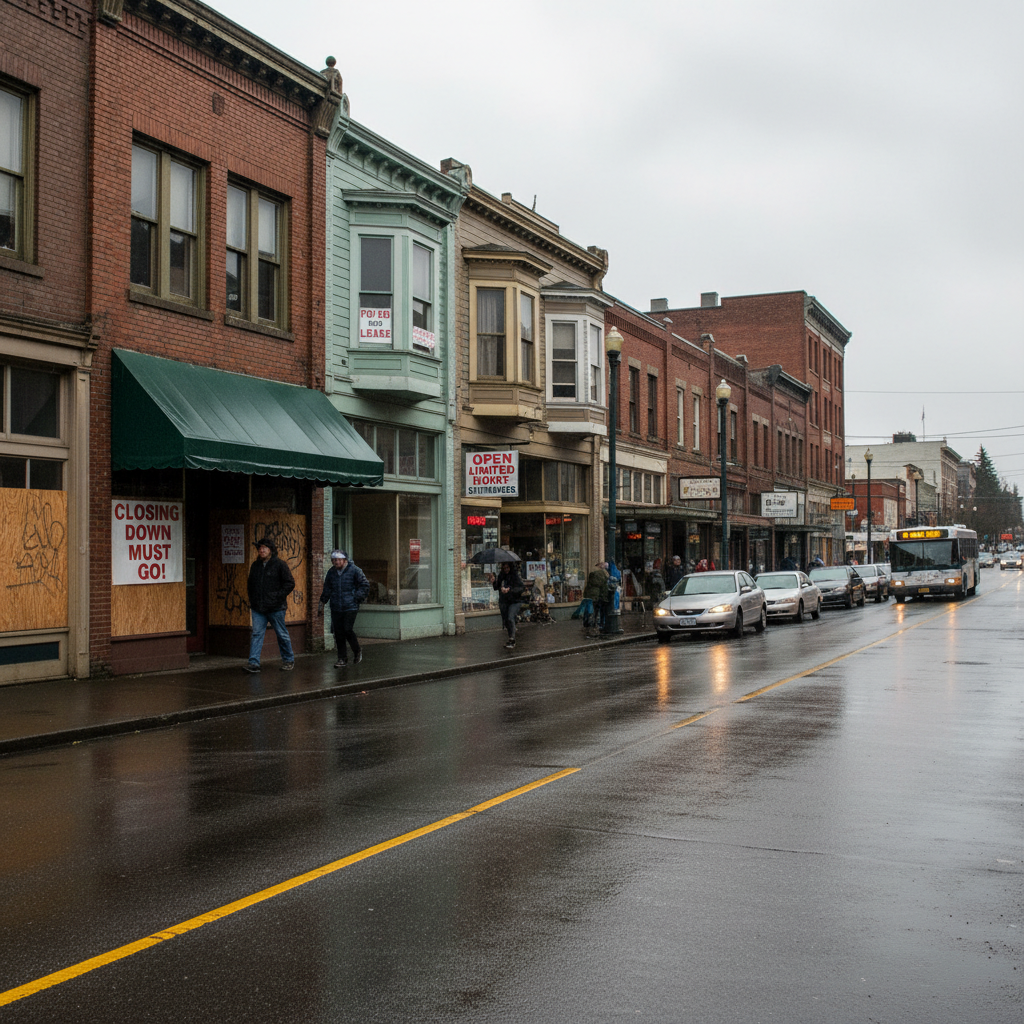
Small business owners in Ashland and Eugene are already feeling the pinch. One local café owner noted, “Customers are reducing extras such as eating out. If rates continue high, we’ll have to rethink our pricing and business model.”
Retailers and service providers statewide share similar worries, as increased financing costs reduce their capacity to grow or invest in new services.
State and Local Leadership Respond
Oregon policymakers and economic leaders are closely watching what the Federal Reserve will do next. While everyone recognizes the necessity of controlling inflation, there is increasing anxiety about how sustained high interest rates might impact economic growth and jobs.
A state economist noted, “The Federal Reserve’s break on rate reductions is a tightrope act. While it reduces inflation, it also heightens the threat of a weakening consumer spending and business investment—two of the strongest drivers of the Oregon economy.”
Looking Ahead: What’s Next for Oregon?
The Federal Reserve’s announcement that two potential rate cuts might still occur later this year brings hope for Oregon’s businesses and consumers. If those reductions happen, they could reduce the cost of borrowing, spur economic growth, and be a relief for families throughout the state.
Meanwhile, Oregon’s citizens and businesses are holding their breath for a time of uncertainty, looking closely to see how the economic terrain will unfold in reaction to national monetary policy.