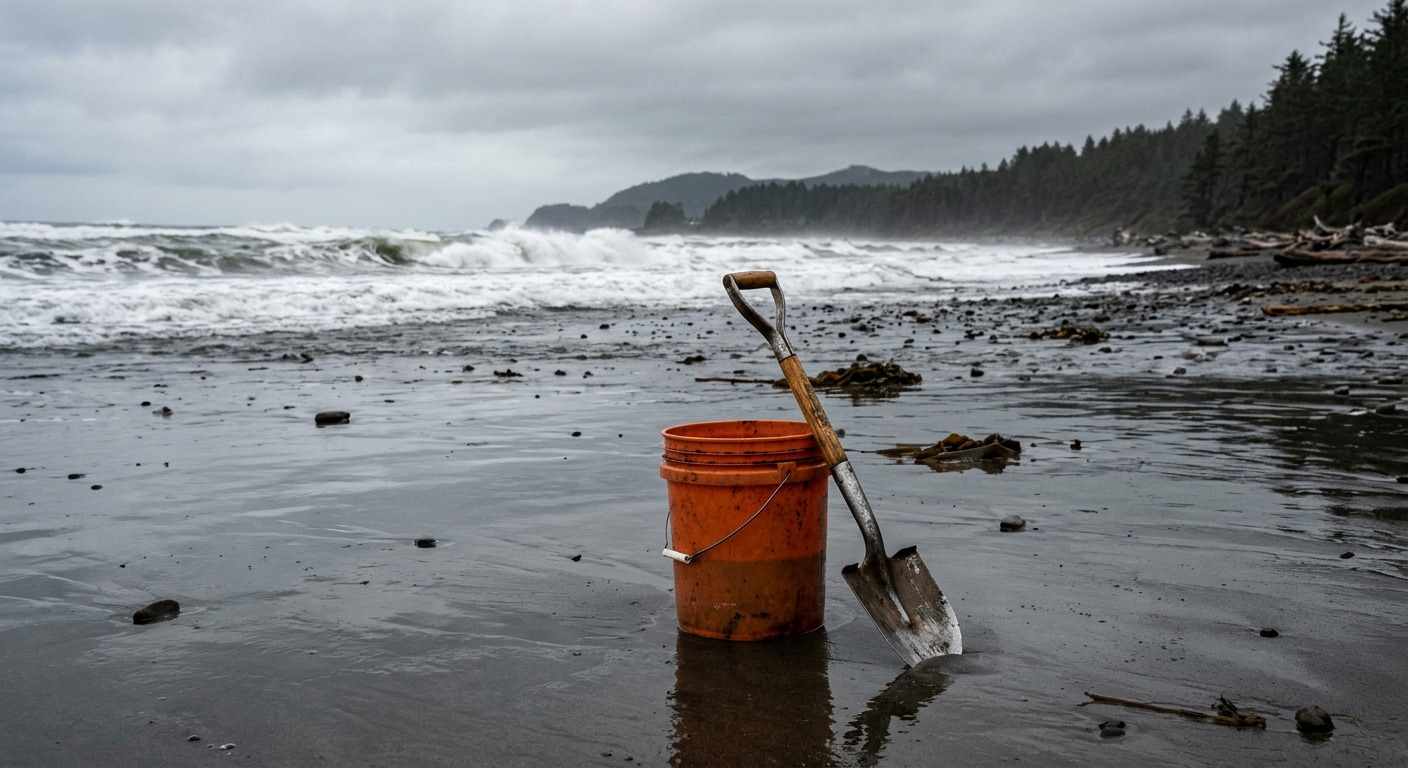
AI-generated illustration; not a photograph of the reported event.
- calendar_today November 8, 2026
Razor Clam Digging Returns to Washington Coast This Week
The Washington coast is set to welcome recreational razor clam diggers at select beaches from November 7 through November 11, as the Washington Department of Fish and Wildlife (WDFW) has approved limited opportunities at Copalis and Mocrocks beaches. Other major clam digging sites, including Long Beach and Twin Harbors, remain closed because of elevated marine toxin levels, specifically domoic acid.
Approved Clamming Dates and Locations
According to the WDFW, the following beaches will be open for razor clam digging during the approved dates:
- November 7 (Saturday): Mocrocks, low tide at 5:06 p.m., -0.2 feet
- November 8 (Sunday): Copalis, low tide at 5:44 p.m., -0.6 feet
- November 9 (Monday): Copalis, low tide at 6:19 p.m., -0.7 feet
- November 10 (Tuesday): Mocrocks, low tide at 6:54 p.m., -0.7 feet
- November 11 (Wednesday, Veterans Day): Mocrocks, low tide at 7:29 p.m., -0.5 feet
Long Beach and Twin Harbors will remain closed until further notice while marine toxin concentrations, including domoic acid, continue to exceed safety thresholds set by the Washington State Department of Health.
Health and Safety Guidance for Clam Diggers
Razor clam digging is only permitted at Copalis and Mocrocks because recent tests show toxin levels remain below the closure threshold at those locations. In contrast, Long Beach and Twin Harbors are still unsafe for shellfish harvesting. Bryce Blumenthal, a WDFW coastal shellfish biologist, emphasized the need for caution as ocean conditions and tides may not be ideal during this series of digs.
With fall and winter storms expected, WDFW urges diggers to monitor surf conditions and consult National Weather Service forecasts, especially when anticipated swells may exceed 11 feet. Beach safety remains a priority, and visitors are advised to pay attention to warnings and surf hazards before heading out.
Declining Clam Populations and Limited Digging Opportunities
WDFW’s summer 2026 stock assessment found that razor clam populations at Copalis and Mocrocks have declined compared to previous years. Due to this drop, officials expect fewer opportunities for razor clam digging during the 2026-27 clamming season at these beaches. Despite this, populations at Long Beach and Twin Harbors remain close to average, though those locations remain closed due to marine toxins.
"The population on Copalis and Mocrocks beaches is not what it had been in previous years," Blumenthal noted. He advised that clammers may need to move around and work harder to achieve a limit during these open dates.
Checking Beach Openings and Avoiding Delays
WDFW reminds the public that Copalis and Mocrocks are not open for digging every time clamming is allowed elsewhere. Diggers should verify current beach openings before traveling. The agency also warns that traffic delays can be expected in coastal communities and at access points during clamming dates.
The best digging conditions are typically found one to two hours before the listed low tide, according to the agency.
Domoic Acid Remains a Concern for Shellfish Harvesting
Closures at Long Beach and Twin Harbors are due to persistent domoic acid, a naturally occurring marine toxin produced by certain algae. Consuming shellfish contaminated by domoic acid can lead to serious health issues. WDFW and the Washington State Department of Health continue to monitor toxin levels and will announce additional openings as conditions become safe for recreational harvesting.
Source: beachconnection.net.