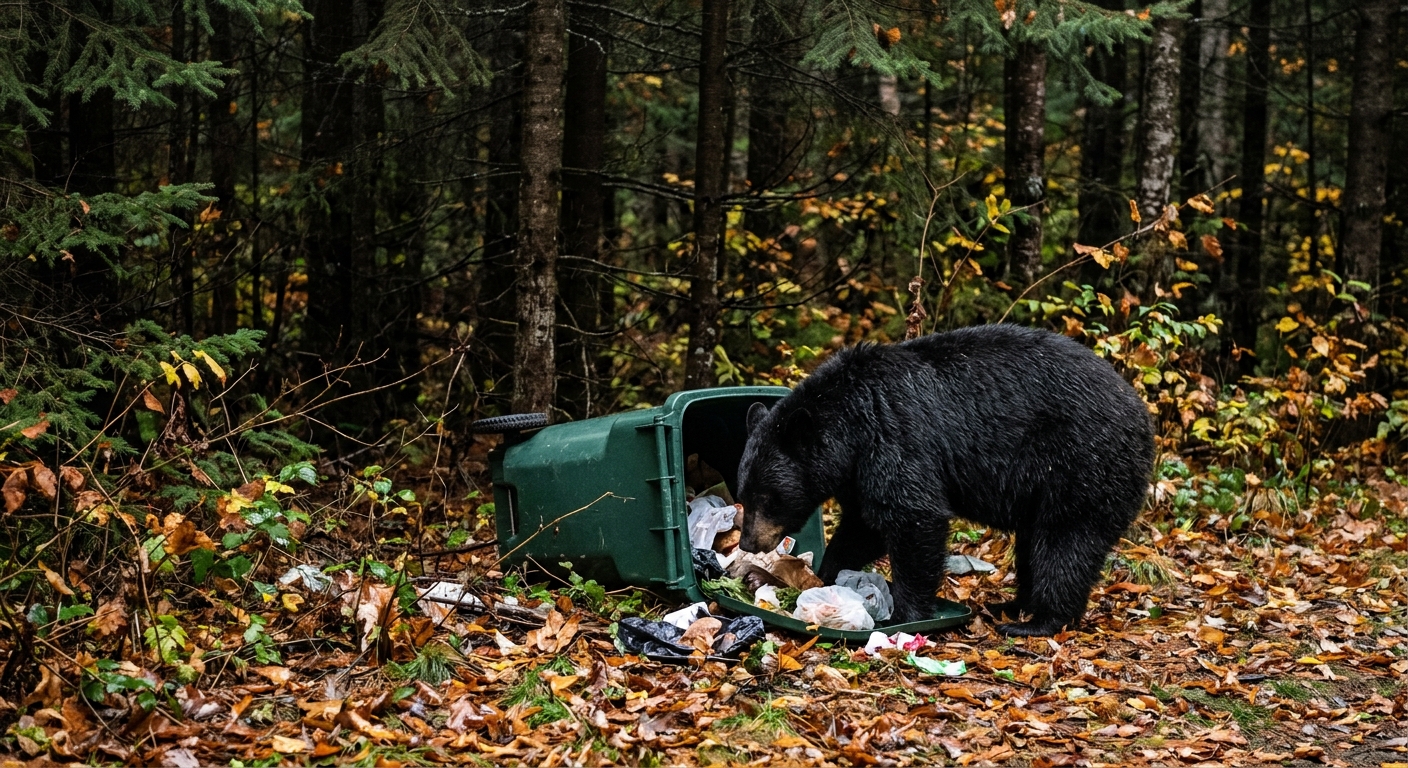
AI-generated illustration; not a photograph of the reported event.
- calendar_today October 27, 2026
ODFW Warns of Increased Bear Activity During Feeding Season
The Oregon Department of Fish and Wildlife (ODFW) is urging residents and visitors to take extra precautions this autumn as black bears become increasingly active during the annual bear feeding season, known as hyperphagia. With autumn temperatures setting in, bears are foraging heavily to build fat reserves for the winter, leading to more frequent appearances in residential and coastal areas.
Bear Hyperphagia: Feeding Frenzy in Fall
Hyperphagia is a period in late summer and fall when black bears intensify their search for food. This season often begins as berries and fruits ripen, peaking when pears and apples become available. During this time, bears can spend up to 20 hours a day foraging. ODFW has reported that a poor mountain berry crop in Western Oregon this year has driven even more bears toward human-populated areas, seeking alternative food sources before the peak of hyperphagia started.
Coastal Communities at Greater Risk for Bear Encounters
Bears in Oregon are highly concentrated along the coast, the Cascade Range, and the Blue Mountains. Wildlife officials note that even more populated and heavily visited seaside towns regularly see bear activity. ODFW emphasizes that coastal residents and visitors need to be especially vigilant about bear attractants and securing food to prevent unwanted bear encounters.
Recommendations: BearWise Practices and Securing Food Sources
ODFW recommends a series of BearWise practices aimed at reducing human bear conflict. The most important step is to remove or secure potential bear attractants such as garbage, pet food, bird seed, and livestock feed. Property managers are encouraged to provide bear resistant cans and educate guests about their use. Trash cans, compost bins, and dumpsters should have locking lids, metal security bars, or be stored in secure, enclosed areas. Taking out the trash right before pickup, rather than leaving it outside overnight, further reduces risks.
Other bear safety tips include removing bird feeders during bear season, as natural food sources abound for birds. Pet owners are urged to feed animals indoors and store pet food inside, as both can attract bears. Residents should also clean and store barbecue grills after each use and communicate with neighbors about unusual bear activity, especially repeated daytime sightings or bears showing little fear of people or pets.
Preventing Long-Term Bear Problems
Wildlife officials warn that bears have an excellent sense of smell and a good memory; once a bear finds an accessible food source, it is likely to return. Female bears can pass down knowledge of reliable food locations to their cubs, making it vital to break the cycle by limiting access. Feeding bears, intentionally or otherwise, teaches them to associate people with food and is illegal in Oregon under ORS 496.730.
Residents who keep backyard chickens or other livestock should review BearWise guidance for raising animals in bear country. Simple precautions can protect both people and bears from unnecessary conflict.
Reporting Bear Incidents in Oregon
ODFW stresses that most bear encounters and conflicts are preventable with proper precautions. Anyone experiencing a bear-human conflict should contact their local ODFW district office. Safety concerns or aggressive bear behavior should be reported to the Oregon State Police.
By staying alert and BearWise, Oregonians can help ensure the safety of both wildlife and human communities during bear feeding season and beyond.
Source: beachconnection.net.