- calendar_today August 14, 2025
Oregon’s real estate market in 2025 is navigating a transformative period shaped by stabilizing interest rates, shifting population patterns, and evolving tenant demands. While the post-pandemic surge has cooled, investors across the state—from Portland to Bend and Eugene—are focusing on long-term fundamentals: steady income, growth corridors, and resilient asset classes.
So which sectors stand out in Oregon this year? From urban hubs to scenic rural towns, seven real estate categories are outperforming due to smart adaptation and regional demand.
Multifamily Housing: The Reliable Performer
Multifamily housing continues to be a dependable asset class in Oregon, especially in cities like Portland, Salem, and Medford. With home prices remaining high and mortgage rates keeping many buyers sidelined, demand for rental units—particularly Class B and C apartments—remains strong.
Neighborhoods like Portland’s Eastside, Springfield near Eugene, and outer suburbs such as Gresham and Hillsboro are seeing sustained demand and sub-5% vacancy rates. Build-to-rent projects and mid-rise buildings are popular among tenants seeking affordability and community. Investors favor these properties for their relatively predictable returns and stable rent growth, which averages around 3% in many Oregon submarkets.
Industrial Properties: Still a Growth Engine
Oregon’s industrial market continues to thrive in 2025, driven by logistics, advanced manufacturing, and semiconductor-related growth. The Portland metro area, especially along the I-5 corridor and in cities like Tualatin and Wilsonville, remains a prime location for warehouse and distribution centers.
JLL reports a 6.7% annual rent increase for industrial assets in the Pacific Northwest, with Oregon seeing particularly low vacancy in last-mile and cold storage facilities. The expansion of clean-tech, chip fabrication (following federal CHIPS Act investments), and e-commerce fulfillment centers is drawing sustained interest from institutional investors and developers alike.
Single-Family Rentals in Suburban Markets
The shift toward suburban living is evident across Oregon. Working families and remote professionals are opting for single-family rentals (SFRs) in cities like Bend, Redmond, and suburbs around Portland such as Beaverton and Tigard. These homes offer flexibility, privacy, and access to strong schools and outdoor amenities—without the financial burden of a down payment.
According to Roofstock’s 2025 data, Oregon ranks among the top Western states for SFR investor activity, particularly in markets with population growth and employment access. With low tenant turnover and steadily rising rents, SFRs are providing consistent returns for investors targeting middle-income families and young professionals.
Migration Trends: From Metro to Lifestyle Markets
Oregon’s population trends continue to shift in 2025. While Portland remains the state’s largest metro, many residents are migrating to mid-size cities and lifestyle-driven regions such as Bend, Ashland, and Corvallis. These areas are attracting both retirees and remote workers seeking affordability and quality of life.
Investors are following these shifts, targeting new developments and adaptive reuse projects in communities with strong tourism, healthcare, or university ties. Bend, in particular, is seeing growth in residential and mixed-use projects as its population rises. These migration patterns are shaping where and how new inventory is delivered statewide.
Mixed-Use Developments & Downtown Revival
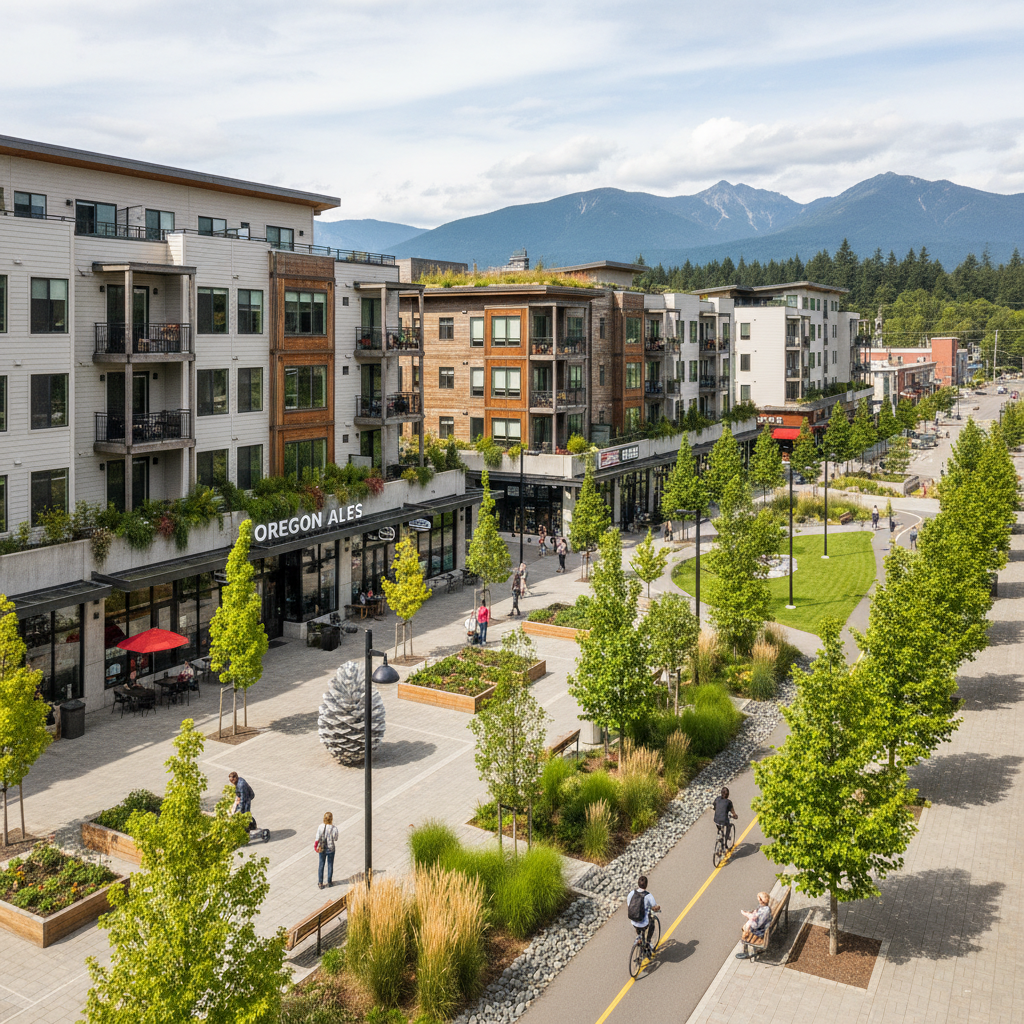
After years of uncertainty, downtown corridors in cities like Eugene, Salem, and even parts of Portland are seeing signs of revival. Mixed-use developments that combine housing with coworking, retail, and community spaces are gaining traction—especially in walkable neighborhoods close to public transit and university campuses.
Developers in Oregon are focusing on placemaking: creating vibrant, inclusive communities that appeal to younger renters and remote workers. While permitting and construction costs remain challenges, these projects are achieving solid lease-up rates and attracting tenants willing to pay a premium for location and lifestyle.
Niche Assets on the Rise: Senior & Student Housing
Two niche sectors gaining momentum in Oregon are senior living and student housing. In communities like Medford and Grants Pass, the demand for independent and assisted living options is rising as the state’s aging population grows. Memory care facilities, in particular, are seeing strong occupancy and investor interest.
Meanwhile, student housing is rebounding near major campuses such as Oregon State University in Corvallis and the University of Oregon in Eugene. Pre-lease rates have climbed above 90%, as students prioritize modern amenities, furnished units, and high-speed internet. Operators offering these features are outperforming in Oregon’s competitive college towns.
Risk Factors and Investment Cautions
While Oregon offers diverse real estate opportunities, investors should remain mindful of regional risks. Wildfires and climate events are pushing up insurance premiums, particularly in forest-adjacent areas like southern Oregon and the Cascades. Some municipalities are tightening building codes and pushing for sustainable design, which can increase upfront development costs.
Portland’s regulatory environment also presents hurdles. Rent control measures, eviction moratoriums, and zoning restrictions require careful navigation. Meanwhile, statewide challenges around housing supply and affordability are creating political pressure that could influence future legislation.
Though interest rates have stabilized, borrowing costs remain above early-decade levels. Conservative underwriting and diversified portfolios are key to managing margins and minimizing exposure to policy volatility.
Expert Insight: What the Analysts Say
“Oregon’s real estate market is one of contrasts—urban markets are recalibrating while lifestyle towns are accelerating,” says Lauren Bellingham, senior economist at CBRE. “Investors with local insight and adaptability are positioned to succeed.”
Redfin’s 2025 Housing Trends report notes Oregon as a “regional bellwether,” where affordability, migration, and innovation intersect. The report emphasizes that success depends on nuanced, local data interpretation—not just following national trends.
Strategic Diversification is Key in 2025
In 2025, Oregon real estate investors are embracing a regionally informed, diversified strategy. Multifamily properties continue to anchor portfolios, while industrial remains a quiet powerhouse amid logistics and tech growth. Single-family rentals are capturing family migration to scenic suburbs and lifestyle towns.
Mixed-use developments are energizing downtown corridors, while senior and student housing are gaining steam in high-demand submarkets. As always, risks related to regulation, climate, and financing require close attention—but investors who tailor their approach to Oregon’s evolving dynamics are well-positioned for long-term success.
With strategic precision and a clear view of regional trends, investors in Oregon are finding opportunity in a market defined by resilience, growth, and reinvention.